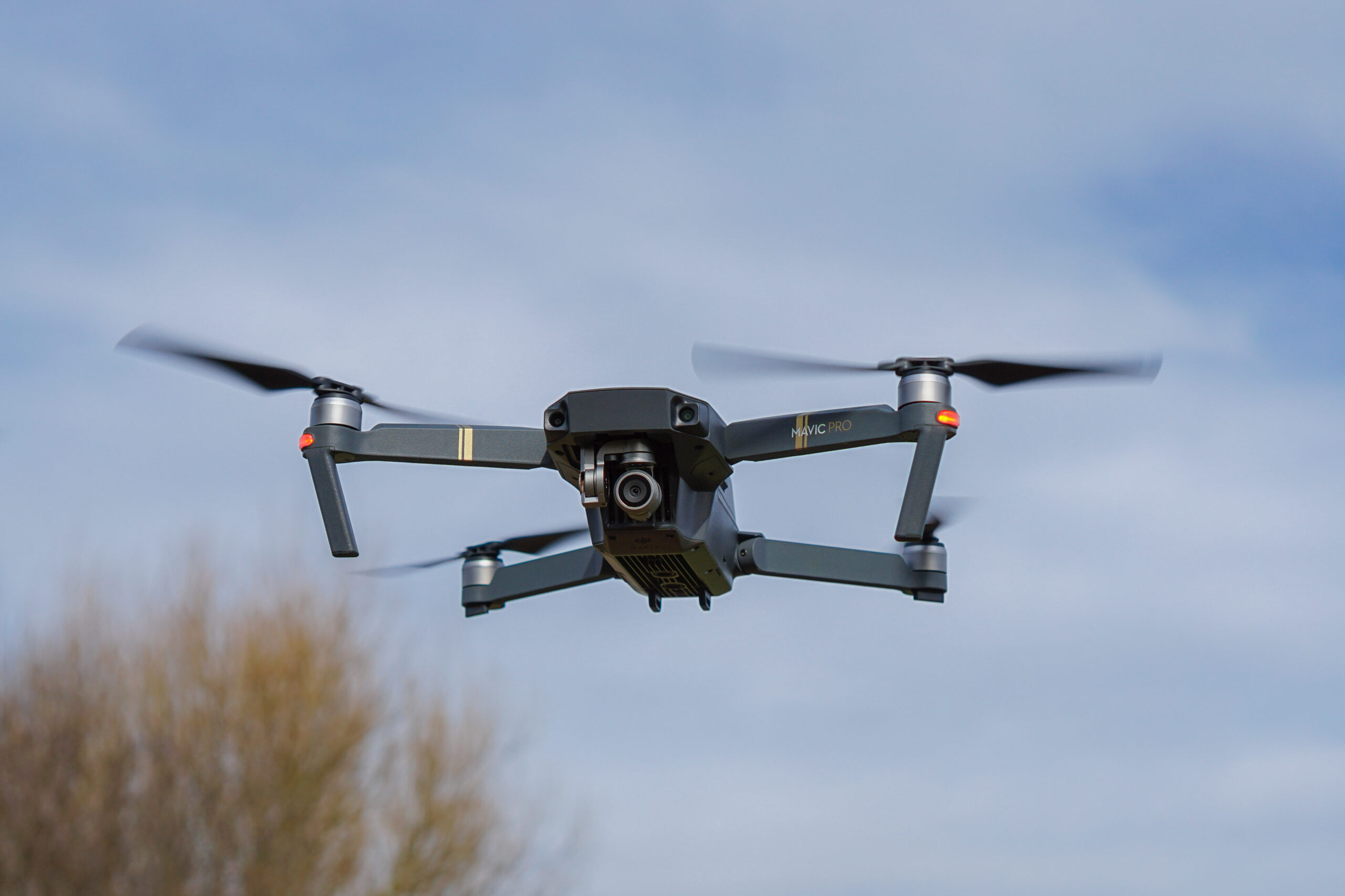
Photo: Sinky, DJI Mavic Pro, CC BY-SA 4.0. Resized; card thumbnails may be cropped. Archive equipment illustration.
Equipment guide. This article explains selection and evaluation criteria; it is not a hands-on product review.
An elevated viewpoint can reveal patterns that disappear at ground level, but greater height does not automatically produce a stronger photograph. Begin with the relationship you want to show: a line through a landscape, a boundary, a repeated shape or the scale of a subject.
Choose an organising element
Look for one structure that can hold the frame together. A road, shoreline or field edge can provide direction, while a small subject may establish scale. Remove competing elements through position and framing rather than expecting the unfamiliar viewpoint to carry the image alone.
Plan the idea from available maps and observations, then operate only where the flight is permitted and conditions are suitable.
Change height with a purpose
Compare how the relationship changes as the viewpoint moves within allowed limits. A lower position may preserve depth; a more downward view may emphasise pattern. Keep track of what is gained and what disappears.
Avoid flying simply to search randomly for a composition. A clear plan preserves attention for responsible operation and a deliberate return.
Review beyond novelty
After the flight, judge the photograph without relying on the fact that it was made from the air. Does the composition guide attention? Is the subject understandable? A successful aerial image uses its viewpoint to reveal a meaningful relationship, not merely to prove that the camera could reach an unusual position.
Continue exploring
Exploring Pre-visualization in Photography · From Single Images to Powerful Stories: Creating a Compelling Photo Essay