A short minimum focusing distance is not the whole story when choosing a macro lens. Compare the size of the subject recorded on the sensor and the usable space between the subject and the front of the lens. Those two details affect whether you can frame, light and approach the subject successfully.
Read the reproduction ratio
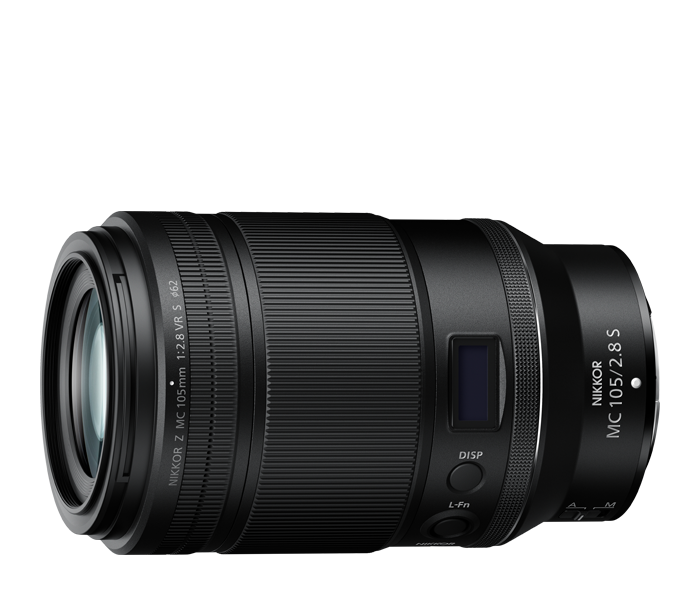
A 1:1 ratio means the subject’s image on the sensor is the same physical size as the subject. A 1:2 ratio means half that size. Nikon’s macro-lens explanation uses these ratios to describe close-up capability, while its MC 105mm product page specifies 1:1 reproduction.
Choose the scale you need before comparing focal lengths. A photograph of an entire flower and a photograph of one tiny structural detail may require different magnification. Compare the ratio stated in the specification, rather than assuming a product name or a sensor crop changes the optical ratio itself.
Check the space for lighting
Working distance concerns the space from the front of the lens to the subject. It is different from a minimum focus distance measured from the camera’s sensor plane. Nikon’s macro guidance identifies that free working distance as a practical distinction between lenses.
At the intended magnification, check whether a hood, diffuser or other accessory consumes the space you expected to use. Consider where light can enter and whether the subject can be approached without disturbance. A specification is most helpful when you translate it into the actual arrangement.
Evaluate the scale you will use
Photograph a stationary, detailed object at the desired reproduction ratio. Inspect focus placement, framing and the ability to position your light. Repeat after attaching the accessories that belong to the real kit.
Our guides to low-angle support and reflector use address two useful parts of a close-up setup. This is a specification-based selection guide, not a hands-on optical review or a sharpness measurement of the pictured Nikon lens.
Sources and further reading
Product photograph: Nikon. Source: https://www.nikonusa.com/p/nikkor-z-mc-105mm-f28-vr-s/20100/overview . No hands-on lens test is claimed.