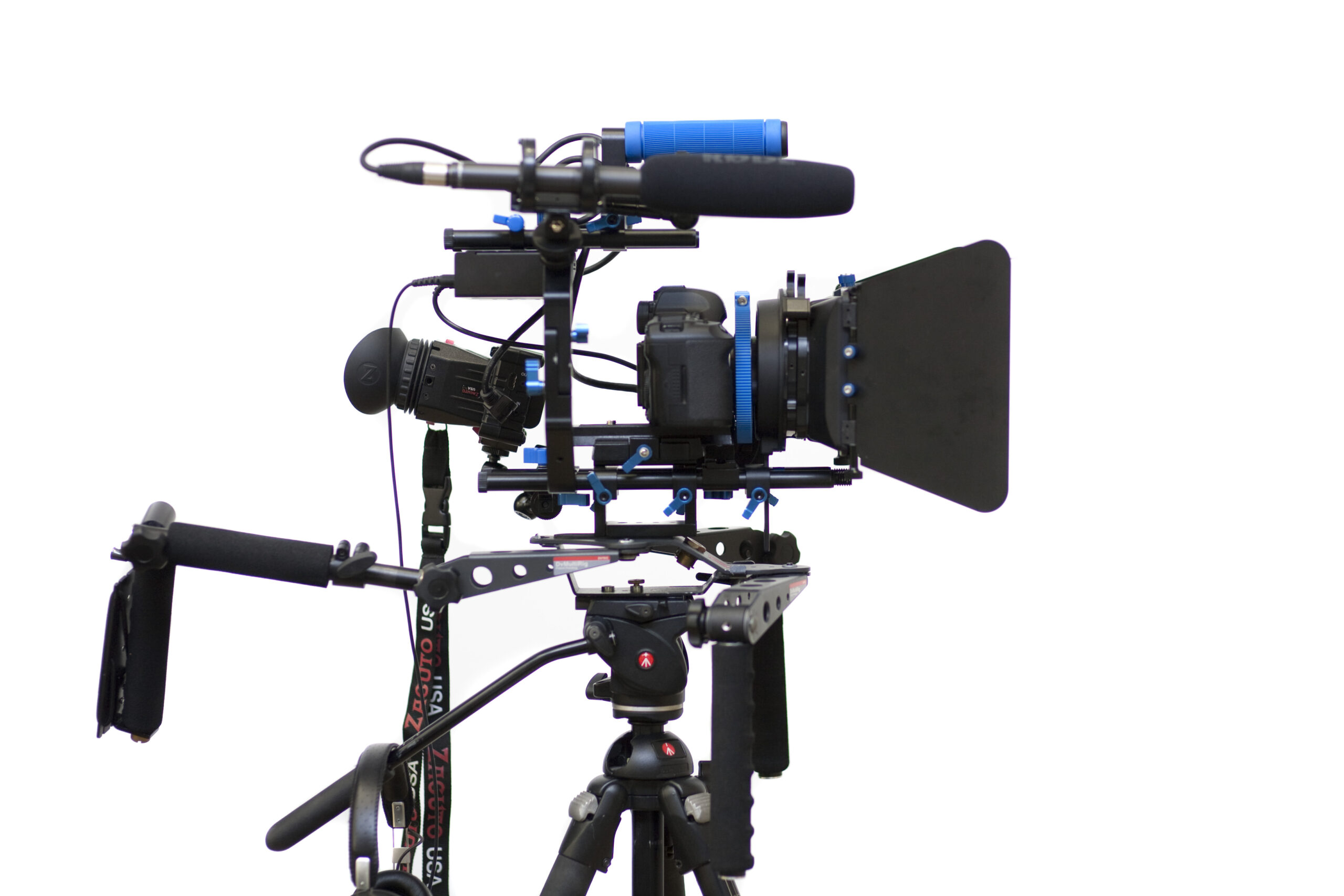
Photo: Sebastiaan ter Burg, DSLR Video rig, CC BY-SA 2.0. Resized; card thumbnails may be cropped. Archive equipment illustration.
Equipment guide. This article explains selection and evaluation criteria; it is not a hands-on product review.
Quick-release systems save time when their components are genuinely compatible and correctly secured. Similar shapes or familiar labels do not guarantee that every plate, clamp and cage will work together. Check the exact combinations before making a support change part of a fast-paced assignment.
Inspect the fit
Follow the manufacturers’ compatibility and locking instructions. Confirm that the plate seats fully and that the safety features function as intended. Do not rely on a connection that requires unusual force or leaves uncertainty about engagement.
Check whether the plate blocks the battery compartment or interferes with a lens collar, strap attachment or cable.
Practice the complete changeover
Move the camera between the supports you actually use, with the lens and accessories attached. Notice whether the balance changes or a control becomes inaccessible. Recheck the connection after each transfer rather than assuming a familiar click proves everything is secure.
Keep the correct tool available if the system requires one, and use appropriate tightening guidance.
Standardise where it helps
A smaller set of verified components can be easier to manage than several overlapping systems. Label parts and keep spare hardware organised. The goal is a support workflow that you can perform deliberately under time pressure, with clear checks at the moments when the camera is most vulnerable to an incomplete connection.
Continue exploring
Benro announces new, ultra-portable travel tripod · RED Digital Cinema, Inc. Releases The V-RAPTOR [X] Z Mount And KOMODO-X Z Mount Cinema Cameras Compatible With The Nikon Z Mount