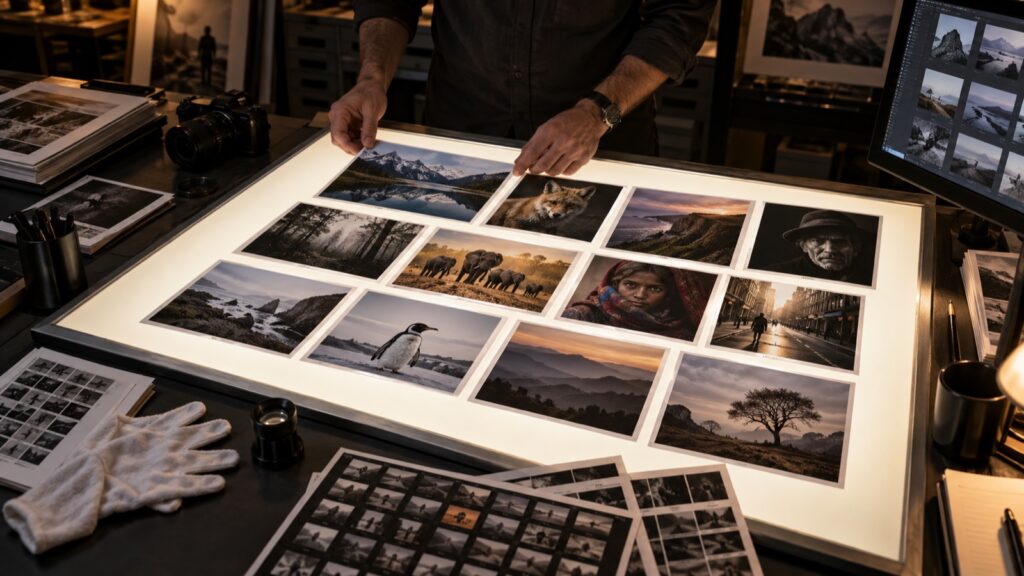
A digital backup does not protect a physical photograph from poor housing, moisture or careless handling. If your archive contains prints, negatives or inherited albums, begin by understanding the material and its condition. A simple, appropriate enclosure can prevent more damage than an ambitious reorganization carried out with the wrong supplies.
Identify the material before choosing the enclosure
The Library of Congress photograph-care guidance emphasizes identifying a photograph’s materials and process before applying storage recommendations. Paper prints, glass negatives and different film bases do not all have the same needs.
Inventory one small group first. Record format, approximate date, condition and any visible damage without dismantling unfamiliar objects. Keep existing labels and relationships intact. An inherited envelope or album arrangement can contain information that a clean new folder would lose.
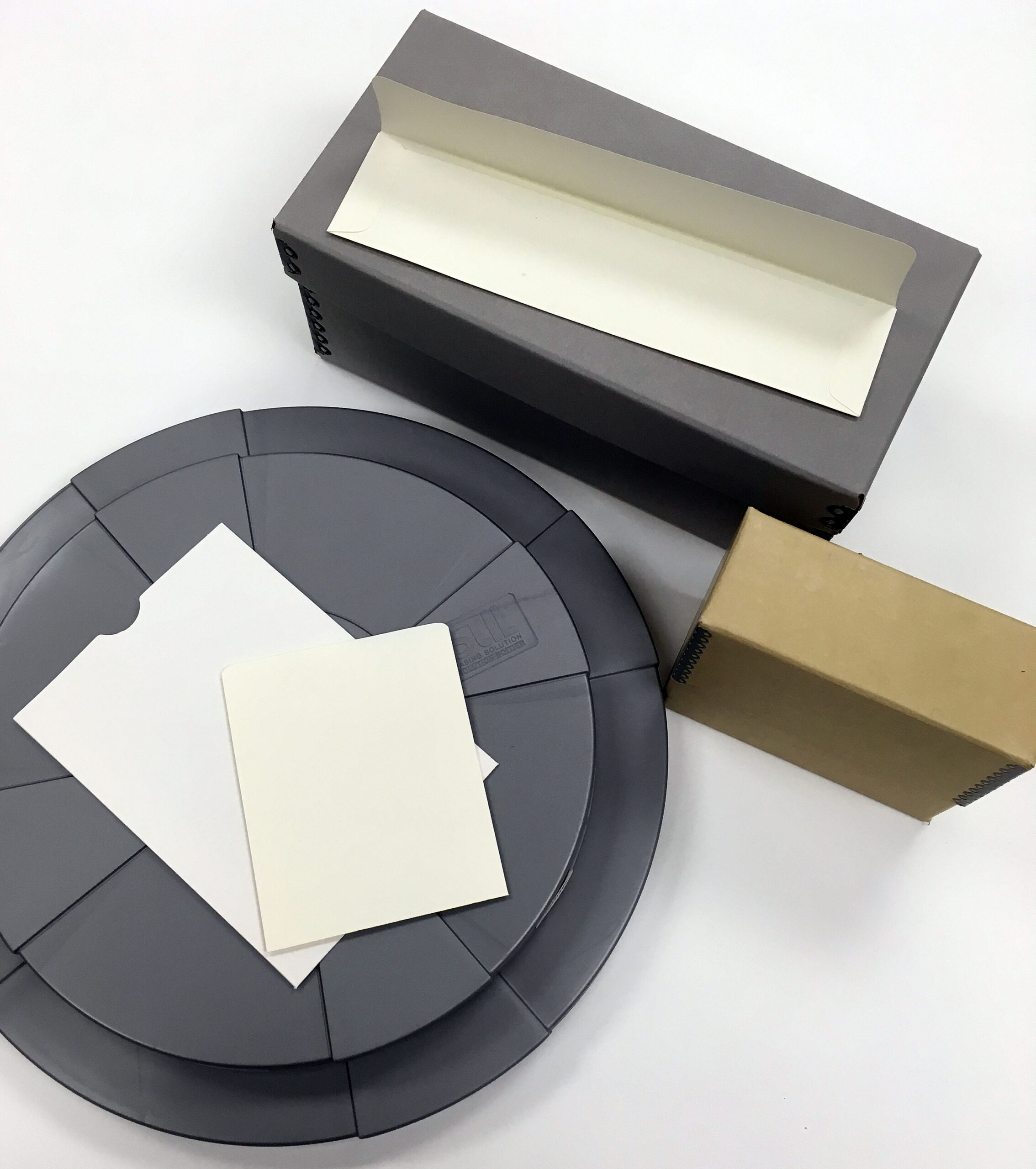
Choose photo-safe housing
Look for materials intended for photographic preservation, including appropriate Photographic Activity Test information. The word archival on packaging is not enough to answer every compatibility question. Follow process-specific guidance, particularly for unusual or deteriorating materials.
Use an enclosure that supports the item without forcing it into place. Avoid crowded boxes, bent corners and fasteners touching the photograph. Label the housing so routine retrieval does not require marking or repeatedly handling the image. The National Park Service Conserve O Grams provide further collections-care references for particular materials and storage tasks.
Make handling predictable
Work on a clean, dry surface with food and drinks elsewhere. Handle photographs by their edges or housing and avoid touching the image area. The Library of Congress discusses clean hands and appropriate glove use; choose the method suited to the object rather than assuming one glove rule works for every photographic material.
Prepare the receiving enclosure before taking an item out. Move one group at a time and maintain its identifier throughout the process. If a photograph is stuck to glass, severely curled or actively deteriorating, do not experiment with separating, flattening or cleaning it. Ask a photograph conservator to assess the problem.
Store for access as well as preservation
Choose a stable, cool, dry location using guidance appropriate to the material. Avoid casual storage beside heat sources or in damp spaces. Specialized cold storage is a conservation procedure with moisture-management requirements, not an instruction to put an unprotected collection into a household refrigerator.
Keep a location index and, where appropriate, a digital reference image. Our articles on disciplined ingest and separating working files from masters describe the digital side. Physical originals need their own clear locations, handling procedures and condition records.
Feature photo: Aperegoy / Wikimedia Commons, CC BY-SA 4.0. Archival housing for photographic materials; resized for display.
Sources reviewed October 30, 2026.