Snow can occupy most of a wildlife photograph while the animal occupies only a small portion. The camera’s suggested exposure may then need interpretation. Judge the snow’s brightness together with fur or feather detail rather than applying one fixed correction to every winter scene.
Establish the light before the action
From a permitted, undisturbing position, make a reference frame of the surrounding scene. Check the histogram and highlight warning, understanding that their display may reflect the camera’s preview processing. Keep important bright detail from disappearing while retaining a useful rendering of the subject.
Nikon’s cold-weather guidance recommends exposure compensation when snow appears too dark. Its Arctic wildlife discussion also notes that a camera’s metering can produce a useful starting exposure in a bright scene. Together, those examples support checking the result rather than automatically adding the same amount every time.
Recheck when the animal changes position
An animal moving from open snow into tree shade changes the problem. Watch whether the meter is responding to the same background and light as before. Check what exposure compensation does in your chosen mode, especially if Auto ISO is involved.
Choose a shutter speed suited to the animal’s movement and an aperture that serves the composition. Do not sacrifice a necessary motion setting simply to keep ISO at an arbitrarily low number. Inspect a test frame when possible, then keep attention on the subject and surroundings.
Preserve texture without forcing a white world
Snow in shade can carry a cool color, while direct light can produce a different appearance. Compare the scene and the file before removing every trace of that variation. In editing, avoid brightening until both snow and pale fur lose their structure.
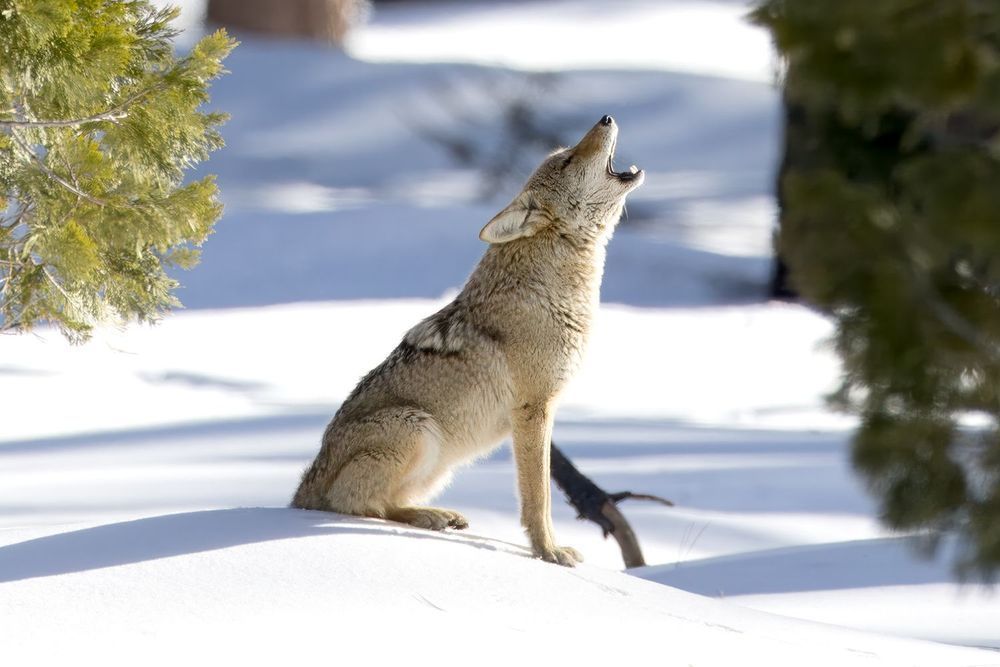
Our guides to respectful wildlife photography and handling a telephoto lens provide related field context. The featured coyote photograph is an illustrative winter image; the photographer’s exposure settings and editing decisions are not inferred from it.
Sources and further reading
Winter’s Call. Photograph © Neal Nachman / Artistic Creationz. Coyote in snow shown as an editorial illustration.