A self-portrait becomes easier when you stop solving framing and posing at the same time. Establish the camera position, focus method and release procedure first. Then make a short sequence in which each variation concerns the subject rather than a technical interruption.
Build the frame around a marked position
Place the camera securely and use a stand-in or a clear floor mark to establish where you will sit or stand. Leave enough room for the gestures you intend to try. Examine the frame edges, background and light before beginning the portrait sequence.
A front-facing monitor can help, but it can also draw your gaze away from the lens. Use it to check placement, then deliberately choose where to look during the exposure. Review one test photograph for focus and framing instead of judging everything from a small live preview.
Choose a repeatable release method
Nikon’s Z 30 self-portrait tutorial describes its front-facing monitor behavior, self-timer and compatible remote options. Those details are camera-specific. Consult your own model’s manual rather than assuming every articulated screen activates the same controls.
Try the self-timer, a compatible hardware remote or an app connection before settling into the pose. Select the method that gives you time to relax and conceal the release without rushing. A self-timer can be perfectly useful when the delay suits the distance to your position.
Check focus with the movement you will make
Test eye detection or your selected focus method while moving as you intend to move in the portrait. Confirm which focus and release settings apply to the actual shooting mode. Manual prefocus is also an option when the working distance stays controlled; it simply requires checking your position and depth of field.
For compatible equipment, Nikon’s connection guide explains phone and computer options. App capabilities vary by camera and connection. Verify the specific remote controls you need rather than assuming that file transfer also provides complete live-view control.
Refine one part of the pose at a time
Make a small sequence with a stable base, then change the direction of the shoulders, the position of the chin or the role of the hands. Review between sequences. This makes the effect of a change easier to recognize and avoids reacting to every single frame.
Our articles on giving a portrait subject an action and building a comfortable seated pose provide useful starting points. For a self-portrait, apply those ideas after the camera routine is dependable enough to stop demanding your attention.
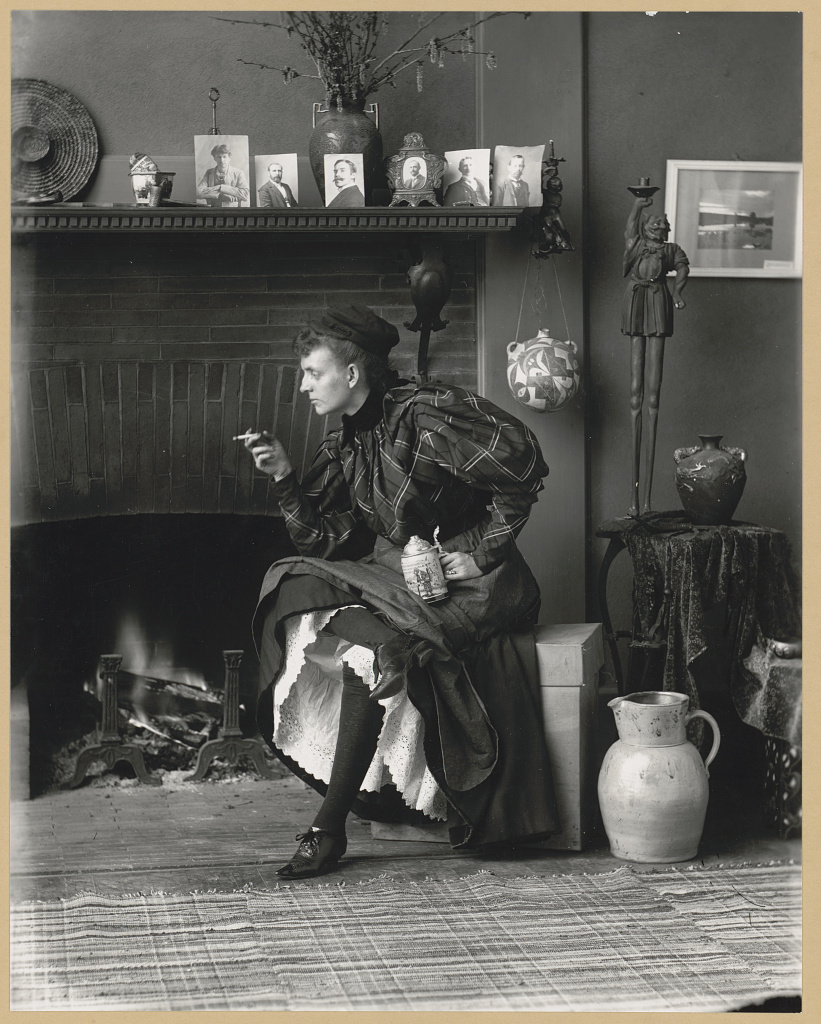
Feature photograph: Frances Benjamin Johnston, self-portrait, 1896. Library of Congress, Prints and Photographs Division, LC-DIG-ppmsca-38981. No known restrictions on publication. Historic example of self-portraiture; it does not illustrate the modern equipment discussed above.
Sources reviewed October 30, 2026.