Some surface details become easier to see when glare is reduced, but reflections also describe a material’s character. Cross-polarization offers a controlled way to compare those views. Use it to answer a specific reproduction or inspection question rather than assuming that the least reflective image is always the most faithful one.
Polarize the light and the camera view
Edmund Optics describes crossed polarizers as two polarization directions arranged perpendicular to each other. In an imaging setup, polarization at the light source and an analyzer at the lens can reduce certain specular reflections. This is a different arrangement from simply adding an outdoor polarizer to the camera.
Use components suitable for the chosen light and follow the makers’ mounting and thermal limits. Keep the object and camera stable while comparing settings. The effectiveness depends on the surface and illumination, so do not assume every metal, coating or transparent material will respond identically.
Keep an unpolarized reference
Make a reference frame before applying the arrangement. Rotate the analyzer while watching the surface, then make another frame after establishing the desired effect. Recheck exposure and color with appropriate references because the filters change the light reaching the camera.
Compare fine surface markings, color relationships and the shape communicated by the highlights. Edmund’s examples show why glare reduction can reveal detail, but the final interpretation still depends on what the photograph is meant to describe.
Choose the view that serves the record
For documentation, retain both versions and record the lighting arrangement. A polarized view may show a mark clearly while an unpolarized view better communicates gloss or curvature. Present both when the distinction matters rather than silently treating them as interchangeable.
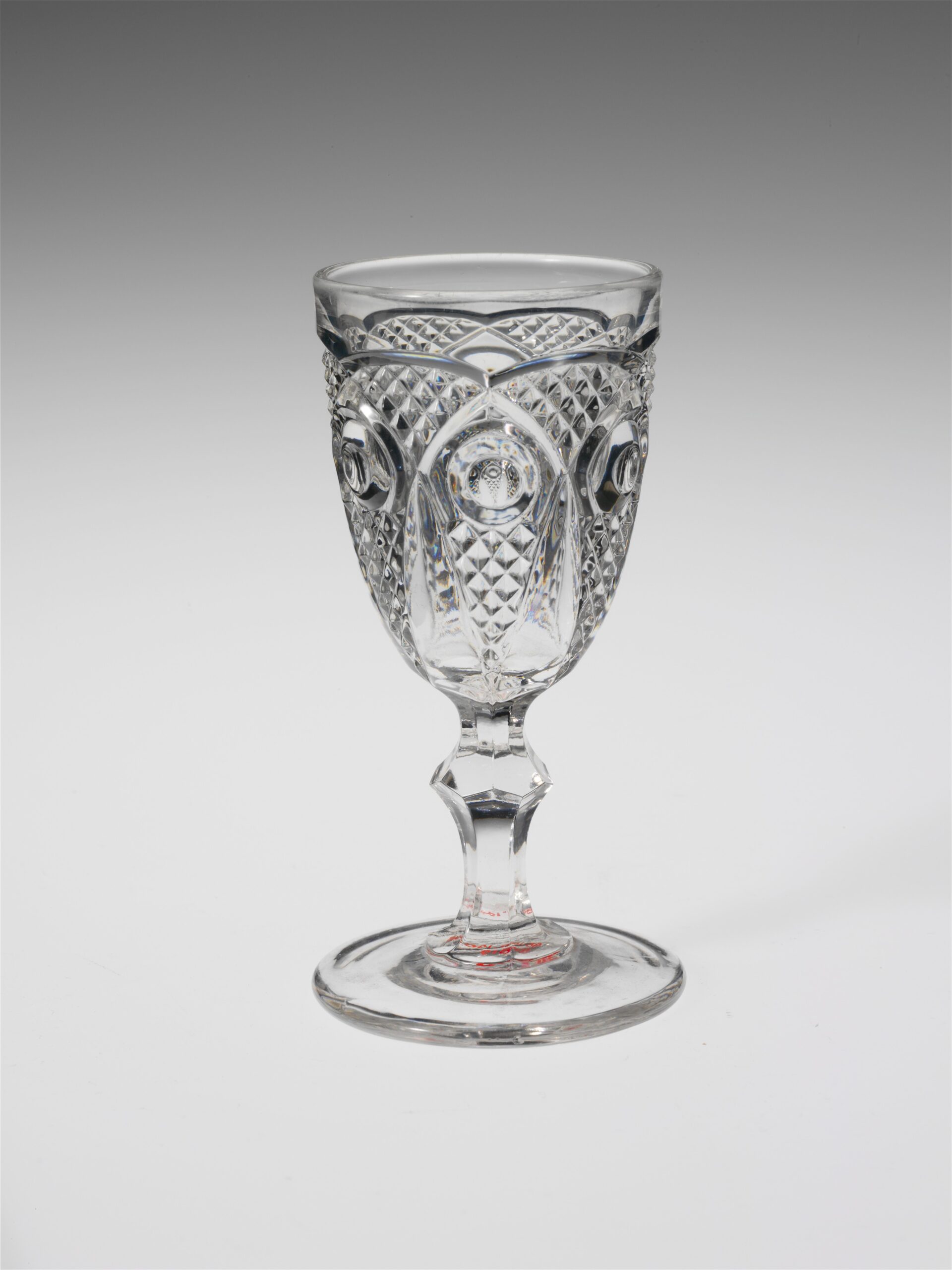
Our guides to circular polarizer evaluation and reflector use discuss related but different controls. The historic wine-glass photograph above is an object illustration; no cross-polarization procedure is claimed for the museum’s image.
Sources and further reading
Wine Glass, The Metropolitan Museum of Art, Gift of Mrs. Emily Winthrop Miles, 1946; 46.140.819. Public domain / Met Open Access. Source: https://www.metmuseum.org/art/collection/search/9940 . Collection photograph, not a cross-polarization demonstration.