A still photograph cannot reproduce a sound, yet a lifted muzzle, open bill or stretched throat can suggest an audible moment. Such gestures give wildlife pictures energy because the viewer can imagine an event unfolding beyond the frozen frame.
Give the gesture space
Start with the direction of the head. A calling animal often needs room above or in front of its face for the posture to feel complete. A crop chosen for an ordinary portrait may feel cramped when the muzzle rises or the bill opens.
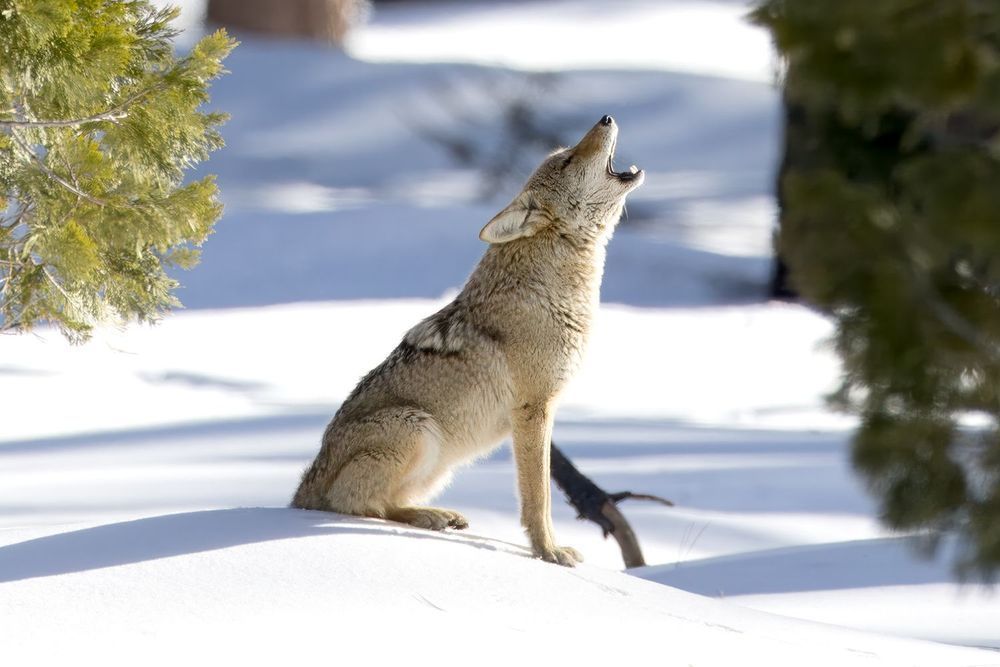
Neal Nachman’s Winter’s Call shows a coyote with its muzzle raised in a snowy setting. The surrounding evergreen shapes and open area around the head help the gesture remain readable. That visible arrangement offers a composition lesson without requiring assumptions about the animal’s motivation.
Watch before changing settings
Observe the pattern of movement from an appropriate distance. If a gesture repeats naturally, prepare the frame and focus placement while the animal is resting. Leave room for the expected motion rather than trying to repair a clipped composition afterward.
Use a shutter speed suited to the movement you see, and inspect the resulting frames. A call can involve more head movement than its quiet surroundings suggest. Avoid treating a motionless body as proof that the whole subject will stay sharp.
Make the caption as precise as the frame
Describe what is visible and what your field notes support. An animal with an open mouth is not automatically angry, hungry or defending territory. If the behavior has not been reliably established, a straightforward description is stronger than an invented narrative.
Keep the encounter undisturbed. The National Park Service’s wildlife photography advice supports quiet, patient watching; do not provoke a response to obtain a more animated picture.
In the edit, judge the gesture at ordinary viewing size before choosing between tiny sharpness differences. The strongest frame may be the one where the line of the head and the surrounding space most clearly convey the moment.
Keep exploring
The Ethics of Wildlife Photography: Distance, Baiting and Honest Images