Wildlife photography can inspire people to value animals and the places they depend on. It can also create pressure on those same subjects when getting the picture becomes more important than protecting natural behavior. Ethical wildlife photography begins with a simple principle: the animal’s welfare matters more than the photograph.
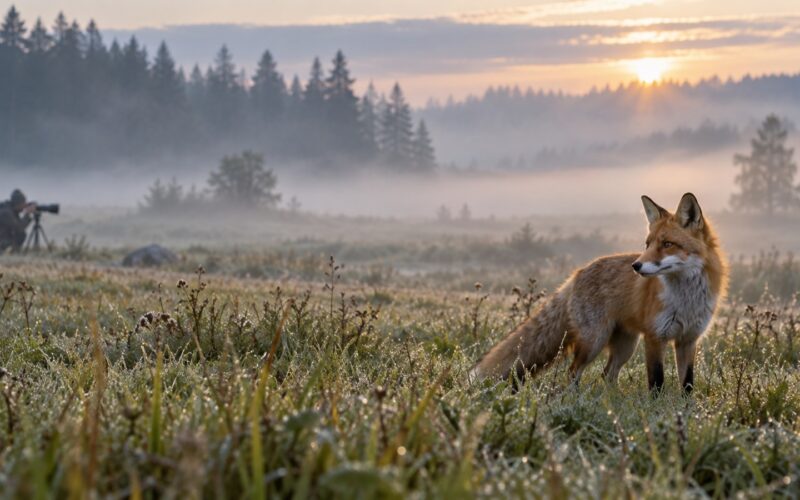
That principle applies whether you are photographing a fox in a neighborhood field, nesting birds along a trail or large mammals in a national park. Good fieldcraft produces more than responsible behavior. It often results in better images because calm animals reveal the gestures, relationships and routines that make wildlife photographs memorable.
Distance is measured by behavior, not only feet
There is no single safe distance for every species or situation. A subject’s response is the most important signal. If an animal freezes, repeatedly looks toward you, changes direction, stops feeding, gives an alarm call, leaves its young or prepares to flee, you are already too close.
Back away slowly and avoid blocking the animal’s route to food, shelter, water or offspring. Local regulations establish minimum rules, but responsible photographers often need to work farther away. A long lens is not permission to approach indefinitely; it is a tool for creating compelling frames while preserving space.
Low viewpoints can make wildlife photographs feel intimate, as explained in Shutterbug News’ article on wildlife photography from a low angle. Choose that viewpoint without crawling toward an animal, damaging habitat or surrounding a subject with other photographers.
Learn the warning signs before entering the field
Research the species you hope to photograph. Learn its active hours, breeding season, feeding patterns and common stress behavior. Understanding the animal allows you to anticipate a scene instead of forcing one.
Watch quietly before raising the camera. Notice travel routes and preferred perches. Set up outside those routes, minimize movement and allow the subject to decide whether to remain. Patience is not passive; it is one of the most important technical and ethical skills a wildlife photographer can develop.
Why baiting is so controversial
Offering food can change an animal’s behavior, draw it toward roads or people, increase conflict, spread disease and create dependence. It can also produce photographs that appear to show spontaneous hunting or natural behavior when the scene was actually manipulated.
Rules differ by species and location, but legality is only the starting point. Before using food, calls or scents, ask whether the method could alter normal behavior, increase risk or mislead the audience. For many wildlife subjects—especially predators and animals near populated areas—the responsible answer is to avoid baiting altogether.
Do not move prey, place captive animals into natural-looking settings or conceal the circumstances of an image. If a photograph was made at a rehabilitation center, controlled workshop or managed feeding station, say so clearly.
Nests, dens and young animals require extra restraint
Nesting birds and newborn mammals are especially vulnerable to disturbance. Repeated approaches can reveal a nest to predators, interrupt feeding or cause adults to leave the area. Never trim branches around a nest, touch eggs or young, widen a den entrance or reposition an animal for a cleaner composition.
Use the longest practical lens, keep visits brief and avoid establishing a visible trail to the site. If an adult will not return while you are present, leave immediately. Consider whether publishing a location could bring additional traffic after you are gone.
Be careful with playback and artificial calls
Recorded calls can cause birds and other animals to spend energy defending territory, searching for a rival or abandoning normal activities. Playback may be restricted in protected areas and is particularly disruptive during breeding season.
If you use sound at all, follow site rules, avoid threatened or sensitive species, keep volume and duration minimal and stop at the first sign of agitation. Silence and observation generally produce more authentic behavior.
Respect habitat as carefully as the animal
A photograph is not ethical if making it damages the place the subject needs. Stay on designated trails where required. Avoid trampling vegetation, crushing fragile ground cover, moving rocks or entering closed areas. Pack out everything you bring and keep vehicles on approved roads.
Working with a tripod does not justify clearing plants from the frame. Change position, adjust focal length or accept a composition that honestly reflects the habitat.
Use honest captions and editing
Captions should tell viewers what they are seeing and disclose meaningful intervention. State when an animal is captive, habituated, photographed under controlled conditions or attracted by a feeder. Avoid inventing dramatic behavior that the image does not document.
Editing standards depend on context. Removing dust spots and making tonal adjustments are different from adding animals, replacing skies or removing tracking devices. Fine-art composites can be legitimate creative work when labeled accurately. Documentary and conservation images require stricter boundaries. For a broader discussion, read AI and Authenticity: Where Does Photo Editing Cross the Line?
Think before sharing locations
Location data can direct crowds toward owls, dens, rare flowers, migration stops and other sensitive subjects. Remove precise GPS information when disclosure could create risk. Use general geographic descriptions and delay posting until vulnerable animals have moved on.
That restraint is especially important when a photograph gains attention. The goal is not secrecy for its own sake. It is preventing one successful image from creating a wave of disturbance.
How to respond when other photographers behave badly
Lead with calm, specific information. Someone may not recognize a stress signal or know a local rule. If behavior creates an immediate danger, contact a ranger, property manager or appropriate wildlife authority rather than escalating a confrontation.
Photographers also shape culture through what they celebrate. Support work made with patience, disclose your own methods and avoid rewarding obviously harmful encounters with attention.
An ethical wildlife photography checklist
- Research the species and location before the shoot.
- Follow all closures, permit requirements and posted regulations.
- Let the animal’s behavior determine your working distance.
- Never block travel routes or separate parents from young.
- Avoid baiting, handling and habitat alteration.
- Use calls and playback rarely, if at all.
- Disclose captive, controlled or staged conditions.
- Protect precise locations when sharing could create disturbance.
- Leave immediately when an animal shows stress.
Responsible fieldcraft makes stronger photographs
The photographers featured in Shutterbug News’ Top 10 Wildlife Photographers You Need to Know demonstrate that impact comes from observation, timing and visual intelligence—not from pushing animals past their comfort.
No photograph is worth disrupting a nest, separating a family or teaching a wild animal to approach people. When the encounter leaves no trace and the subject continues behaving naturally, the photographer has protected both the animal and the credibility of the image.