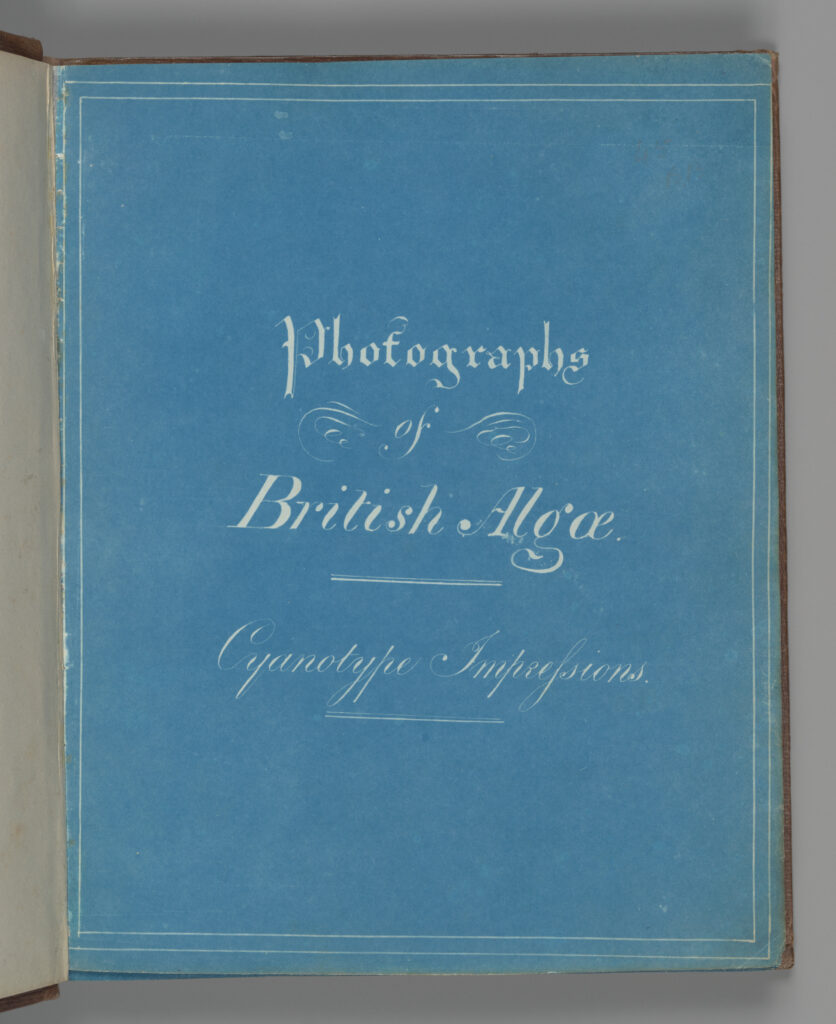
Anna Atkins’s botanical cyanotypes offer a useful challenge to photographers accustomed to choosing lenses: what happens when the subject touches the image-making surface? In Photographs of British Algae: Cyanotype Impressions, published in installments beginning in 1843, specimens placed on sensitized paper produced pale forms against blue grounds. The Metropolitan Museum of Art dates the book to 1843–53.
Look at the space between branches
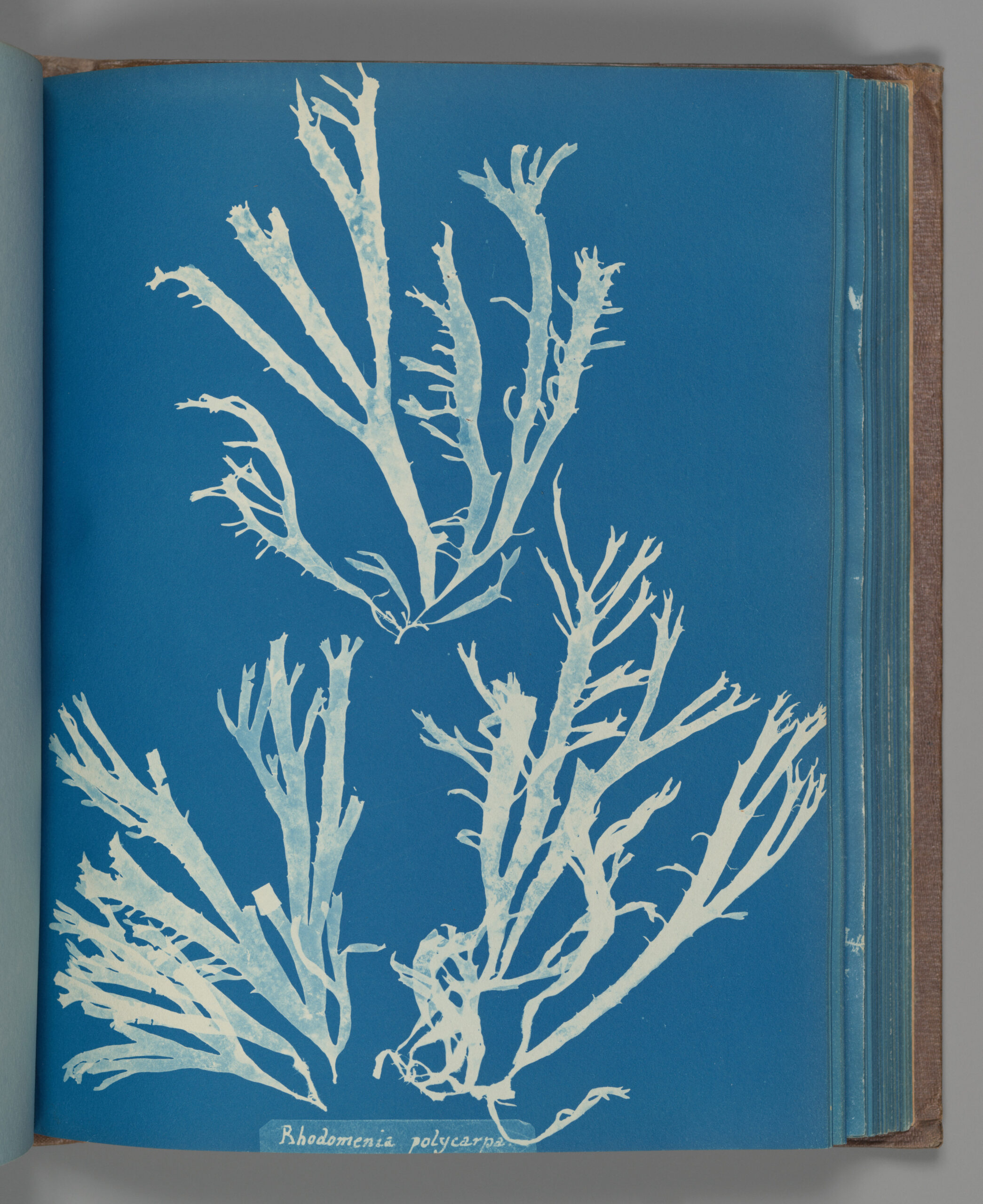
The featured Rhodomenia Polycarpa plate invites close attention to small intervals. The specimen’s branching structure remains readable because the surrounding blue is an active part of the composition. Follow one branch outward, then look at where adjacent forms approach or separate. This is a way to study visual structure before discussing equipment.
Atkins’s project also depended on identification. The Met records that she used William Harvey’s botanical nomenclature and labeled the plates by hand. The Natural History Museum describes the care involved in producing the book’s photographic pages. Scientific description and visual arrangement meet on the same sheet.
A photograph made by contact
The cyanotype process was invented by John Herschel in 1842. Atkins arranged algae directly on light-sensitive paper and exposed it to sunlight. The resulting image is a contact record rather than a camera view of a specimen sitting in a landscape. Scale, arrangement and the relationship between specimen and paper become central choices.
For a looking exercise, sketch the silhouette of an ordinary fallen leaf without adding surface texture. Then try three placements on a blank page: centered, diagonal and close to one edge. Compare how clearly each arrangement describes the leaf. This paper exercise borrows a compositional question from Atkins without pretending to reproduce her photographic process.
Read the plate as an object
Notice the handwriting, page edge and blue field alongside the specimen. Those elements belong to the photographic work’s physical presentation. They help explain why seeing an entire page can reveal something a tightly cropped detail loses.
For a contemporary project, carry that attention to the statement accompanying your photographs and to the structure of a photographic essay. A precise label and a considered margin can make a quiet image easier to understand without adding a louder effect.
Sources and further reading
Anna Atkins, Rhodomenia Polycarpa, ca. 1853. The Metropolitan Museum of Art, Gilman Collection, Purchase, The Horace W. Goldsmith Foundation Gift, through Joyce and Robert Menschel, 2005; 2005.100.557 (82). Public domain / Met Open Access.