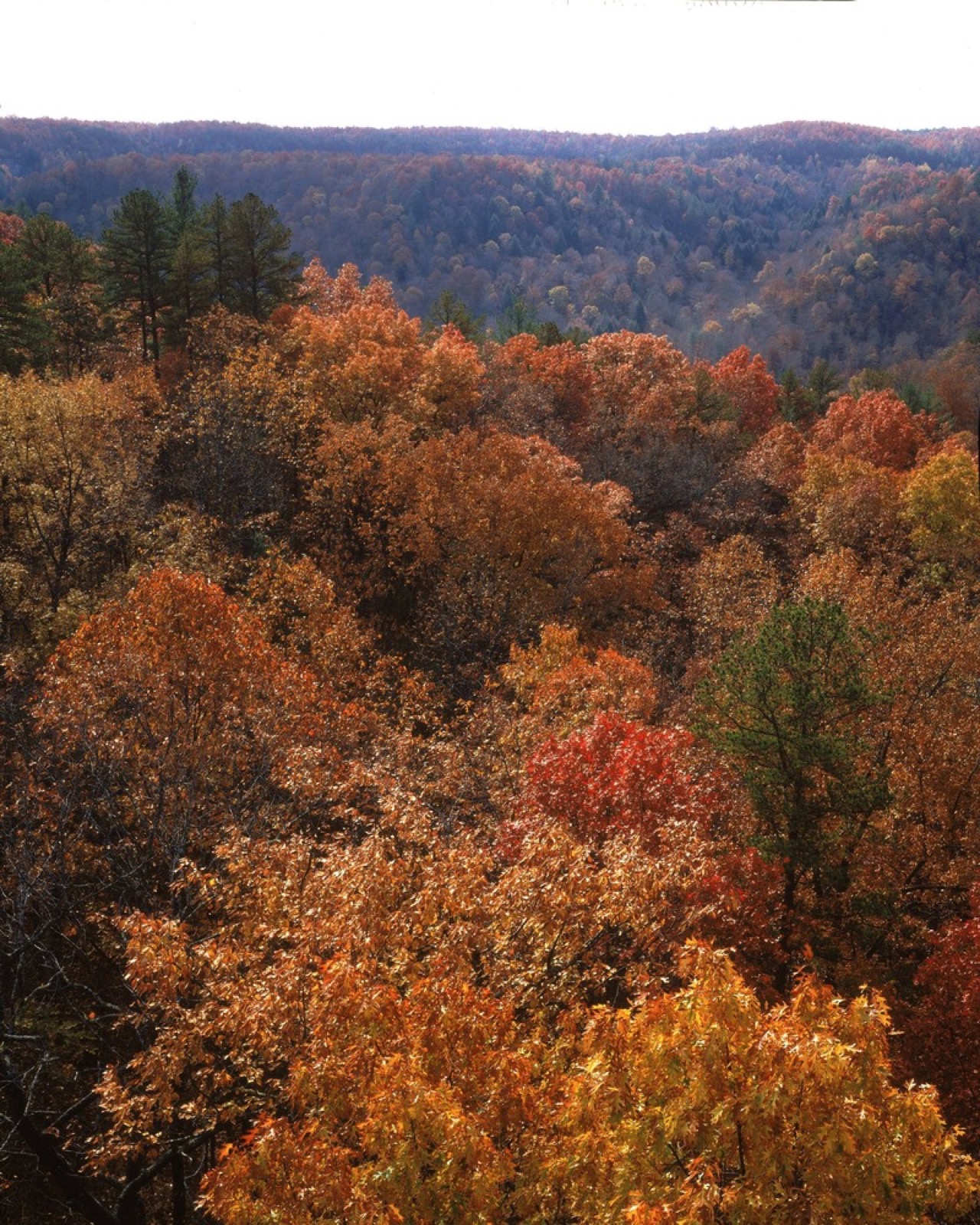
Photograph: National Park Service, Middle Creek Overlook. Illustrative landscape image.
A short exercise is useful when it gives you a clear question to answer. For this session, choose one accessible subject and stay in the same small area for twenty minutes. Use one lens or a fixed zoom setting so equipment changes do not become the main activity.
Spend five minutes looking
Before photographing, identify the brightest area, the main shapes and the background. Walk around where it is safe and permitted. Notice what changes when you move a little to either side or lower the camera.
Write one sentence about what interests you. It might be the relationship between a shadow and a doorway, or the way a branch interrupts an otherwise empty sky. That sentence becomes the purpose of the exercise.
Make three deliberate variations
Create one frame that establishes the setting, one that simplifies it and one that changes the relationship between foreground and background. Check the edges before each exposure. Avoid making a burst of near-identical images simply to feel productive.
For the final five minutes, revisit the strongest idea and refine it. Change only one thing at a time so you can see why a photograph improves or weakens.
Review the decisions
Choose three frames and compare them at the same size. Note which change mattered most and which added nothing. Repeat the exercise another day with a different subject. Progress comes from recognising the effect of a decision, not from accumulating a large number of exposures.
Continue exploring
25 Photography Tips for Beginners · Exploring Pre-visualization in Photography