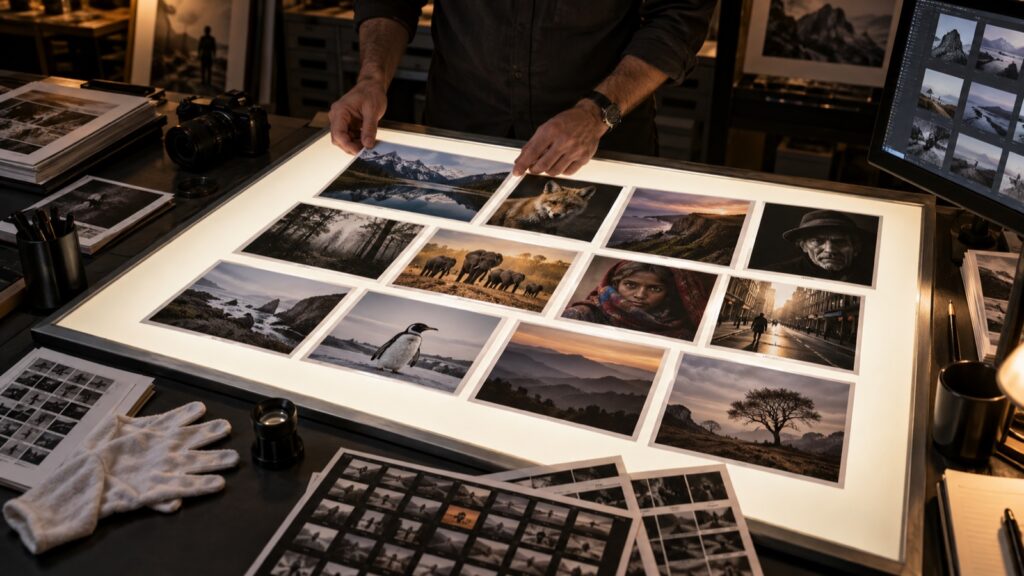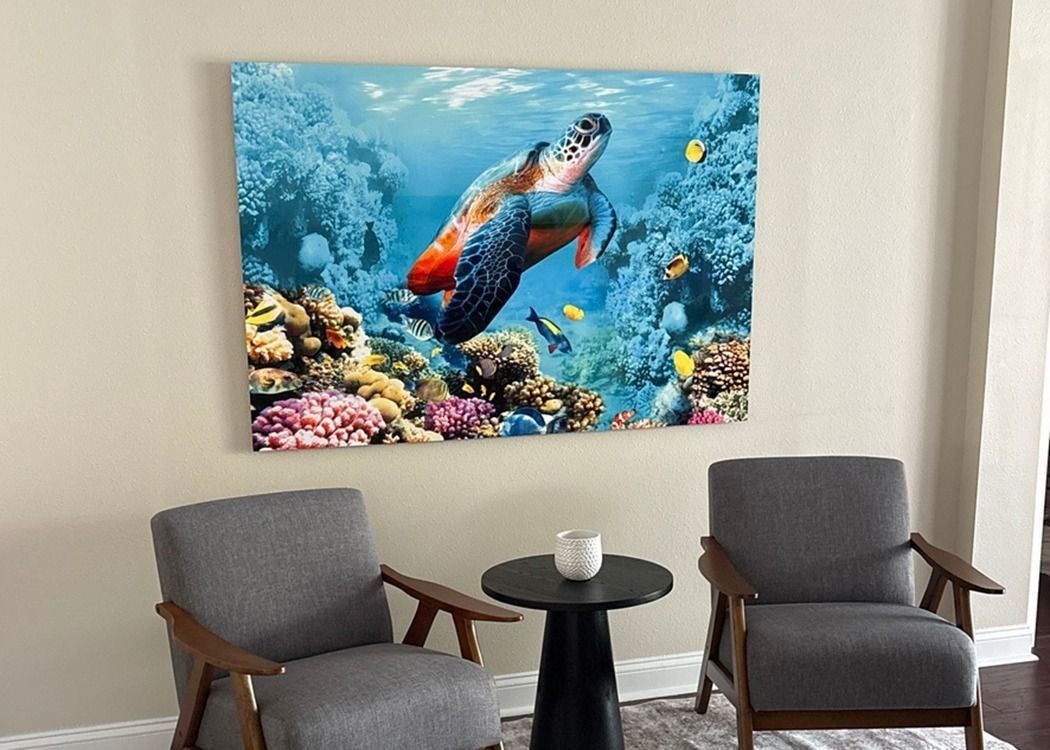
Photograph: Neal Nachman / Artistic Creationz. Used as an illustrative image.
Equipment guide. This article explains selection and evaluation criteria; it is not a hands-on product review.
A photo printer occupies more space in use than it does in a product photograph. Before ordering, map the complete printing process: stored paper, loading, output, inspection and the place where finished prints will wait for presentation.
Leave room for the paper path
Check the manufacturer’s dimensions and operating instructions with trays and feeds in their working positions. Measure the available space rather than estimating from the closed printer. Include access for routine maintenance and supply changes so you do not have to move the machine whenever it needs attention.
Give unopened paper and in-progress prints a clean, suitable storage place. Follow the paper maker’s handling recommendations. Keep drinks, loose tools and the packing materials from other studio jobs away from the area where paper is loaded and inspected.
Make evaluation repeatable
Choose a consistent place to examine prints. You do not need an elaborate display to benefit from a tidy surface and stable lighting. Keep a reference print nearby and write down the paper and settings used for successful output.
Add a simple production log with the file version, size, paper and date. This is especially useful when a client returns for another copy months later. The goal is to make printing easy to resume after a break. A modest printer with a well-organized working area can be more useful than a larger machine that is awkward to load, inspect and maintain.
Continue exploring
Ten Things Photographers Need to know about Achieving Success in Professional Photography · The Finished Photograph: A Professional Guide to Metal Prints