The shortest flash-duration number on a product page may occur at a power setting too low for your intended photograph. Compare duration at the output, mode and lighting arrangement you actually need. A useful action-lighting decision connects brightness and duration rather than treating them as unrelated headline figures.
Compare like measurements
Phase One explains that t.5 measures the period above half the pulse’s peak intensity, while t.1 measures the longer period above one tenth. The longer tail can matter when the goal is to limit motion blur. Compare the same measurement convention across products.
Profoto’s A10 table lists t.5 and t.1 separately for Normal and Freeze modes at different power settings. It demonstrates why one minimum-duration figure is insufficient. Read the row corresponding to the output you expect to use, and check the mode as well as the fraction of a second.
Account for the rest of the exposure
Set a supported flash synchronization arrangement and make a frame without flash to see how much ambient light records. If the ambient exposure already shows substantial subject motion, a brief flash pulse may add a sharp component without eliminating the other blur.
Use a safe, repeatable moving subject for comparison. Keep distance, modifier, exposure and the relevant movement consistent. Inspect both the main subject edge and any secondary trail, then separate flash-duration behavior from missed focus or camera movement.
Evaluate a practical setting
Record whether the chosen output is sufficient through the modifier and whether recycle behavior suits the session. If you change distance or light shaping to gain brightness, repeat the motion test because you have changed the working setup.
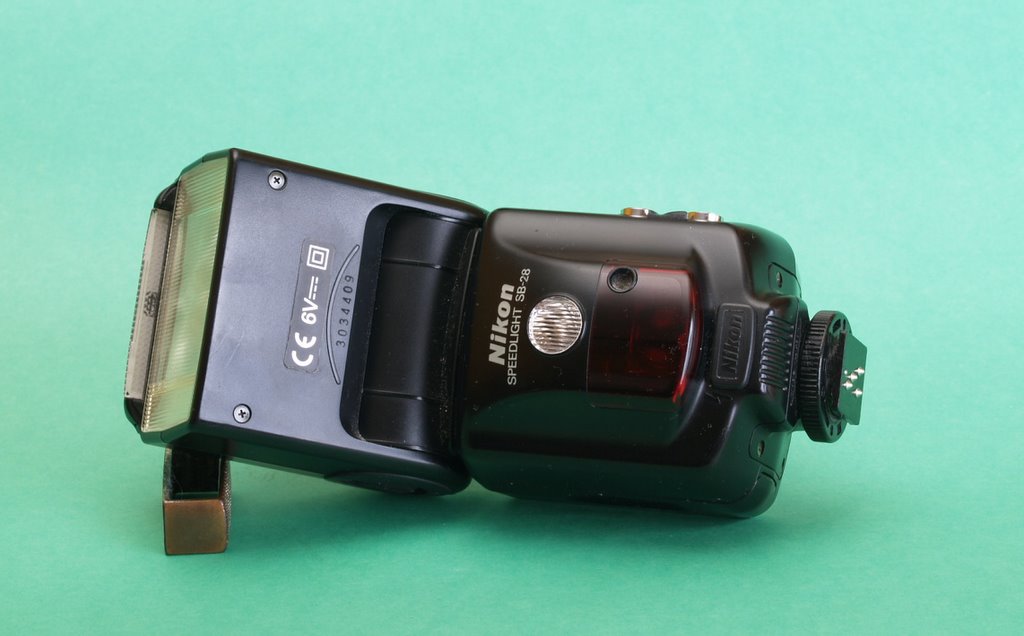
Read our guides to lighting specifications and continuous light versus flash for related comparisons. This article does not assign the historical Nikon SB-28 shown a duration taken from the Profoto table; the photograph is an equipment illustration only.
Sources and further reading
Nikon Speedlight SB-28 photograph: HenrikHardcore at Danish Wikipedia / Wikimedia Commons, CC BY-SA 3.0. Source: https://commons.wikimedia.org/wiki/File:Nikon_flash_Speedlight_SB-28.jpg . License: https://creativecommons.org/licenses/by-sa/3.0/ . Resized for display.


