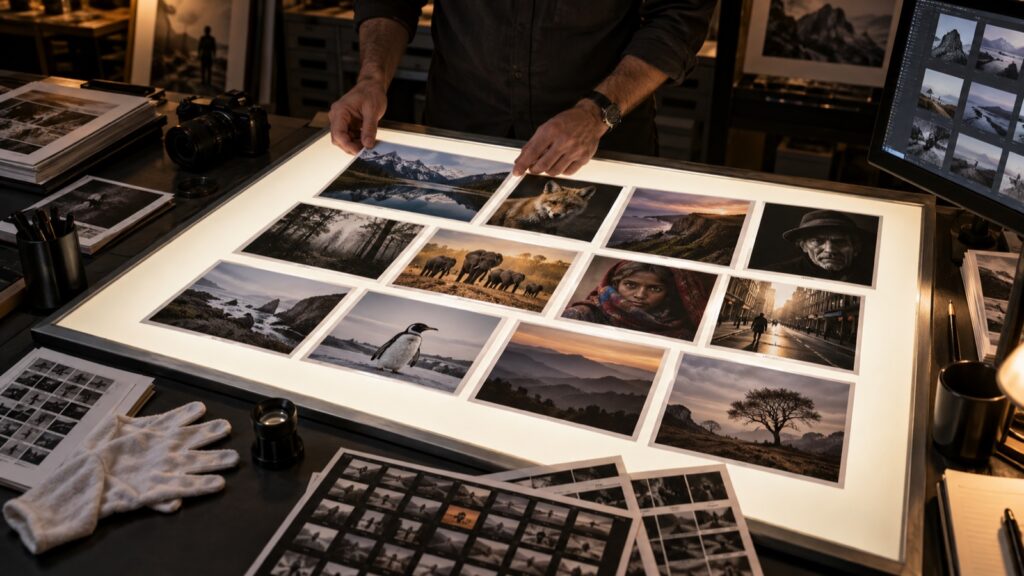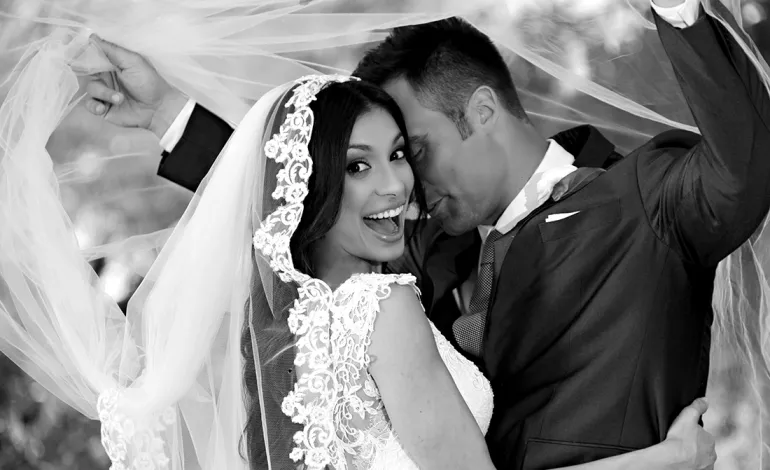
Archive image from Shutterbug News’s Progressive Posing feature.
Hands become awkward when a subject is told only to make them look natural. Give them a believable role that fits the portrait, then refine the placement without turning the session into a detailed anatomy exercise.
Begin with an ordinary action
Ask the person to rest a hand comfortably, hold an appropriate object or lightly adjust clothing if that action suits them. Avoid introducing a prop solely to occupy the fingers when it has no connection to the person or purpose of the image.
Watch the level of tension. A tightly gripped object or pressed hand can communicate more strain than the subject intends. Invite them to release and settle again, then make a frame during the transition. Demonstrate the action rather than moving their hands without permission.
Review the whole composition
Check how the hand relates to the face, clothing and frame edge. A small change in camera angle may reduce a distracting overlap. When cropping, choose a deliberate boundary that supports the image rather than cutting simply to hide uncertainty.
There is no single hand position that works for every body, expression or portrait style. Keep the subject’s comfort and range of movement central. Make a simple version first and compare it with any more designed arrangement. The best placement is usually one that belongs to the person’s action and lets the viewer remain engaged with the portrait as a whole.