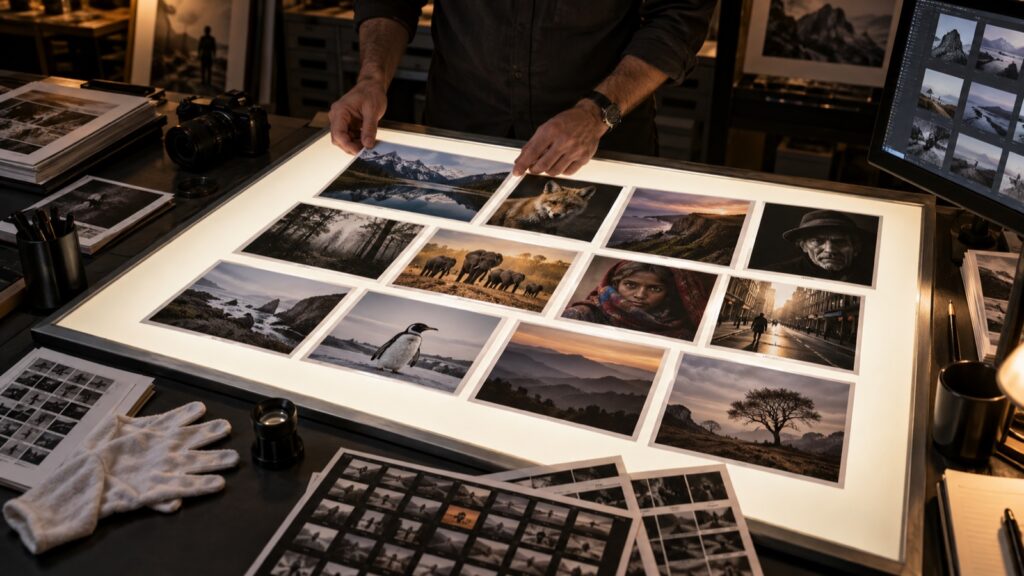
Photograph: Neal Nachman / Artistic Creationz. Used as an illustrative image.
Equipment guide. This article explains selection and evaluation criteria; it is not a hands-on product review.
Printing at home offers a direct connection between an edit and a physical result. A professional lab can offer production sizes and finishing options that do not fit a small studio. The right choice depends on the work you make and the process you want to manage.
Compare one real project
Choose a finished series and price its actual output: dimensions, paper, borders, number of copies and presentation. For home printing, include trial sheets, supplies and the time spent preparing and checking output. For a lab, include delivery, proofs and the cost of correcting a file before the final order.
Ask the lab about file preparation, color management and how repeat orders are handled. For a home setup, review the printer manual and the paper supplier’s guidance. Both routes benefit from a recorded process; neither removes the need to judge a physical proof.
Use a hybrid approach when it helps
A small printer can be valuable for sequencing, tonal decisions and portfolio experiments even when final exhibition pieces come from a lab. Conversely, a reliable lab may handle everyday production while you reserve home printing for a particular paper or personal project.
Keep the decision tied to frequency. A process you enjoy and use regularly may justify more involvement than one you need only twice a year. Make one complete test order before committing to a larger equipment purchase or an entire exhibition run. Evaluate the finished object, the effort and the consistency together.
Continue exploring
The Finished Photograph: A Professional Guide to Metal Prints · How to Prepare Photographs for Juried Shows and Gallery Submissions