A woodland scene can feel clear while you stand inside it and become tangled in a photograph. Depth becomes a flat arrangement of trunks, branches and bright gaps. Begin by separating those forms before relying on attractive color to hold the picture together.
Select one organizing shape
Choose a trunk, an opening or a repeating rhythm as the main structure. Ask which surrounding elements support it. The Woodland Trust’s photography guidance encourages deliberate composition and attention to light; use that as a starting point for a specific, manageable scene.
Stay on permitted routes and protect the ground around the trees. Do not remove branches or vegetation to clean up a view. The exercise is to find a camera position and framing that clarify what is already there.
Inspect overlaps from the camera position
Compare two nearby, safe viewpoints. Watch whether a dark trunk separates from another or merges into it. A small lateral change can alter the arrangement without requiring a more dramatic location.
Canon’s landscape guidance discusses changing the camera’s viewpoint. In woodland, apply that idea to relationships rather than novelty: does the move make the chosen tree easier to see, or merely introduce a new distraction? Check any bright sky holes near the frame edge and compare a version with less sky.
Review the structure without the color
Temporarily view a monochrome preview or reduce saturation in a copy. Look for a readable light-and-dark arrangement. This is an editing exercise, not a requirement that the final photograph be black and white. Restore color and check whether it strengthens the same structure.
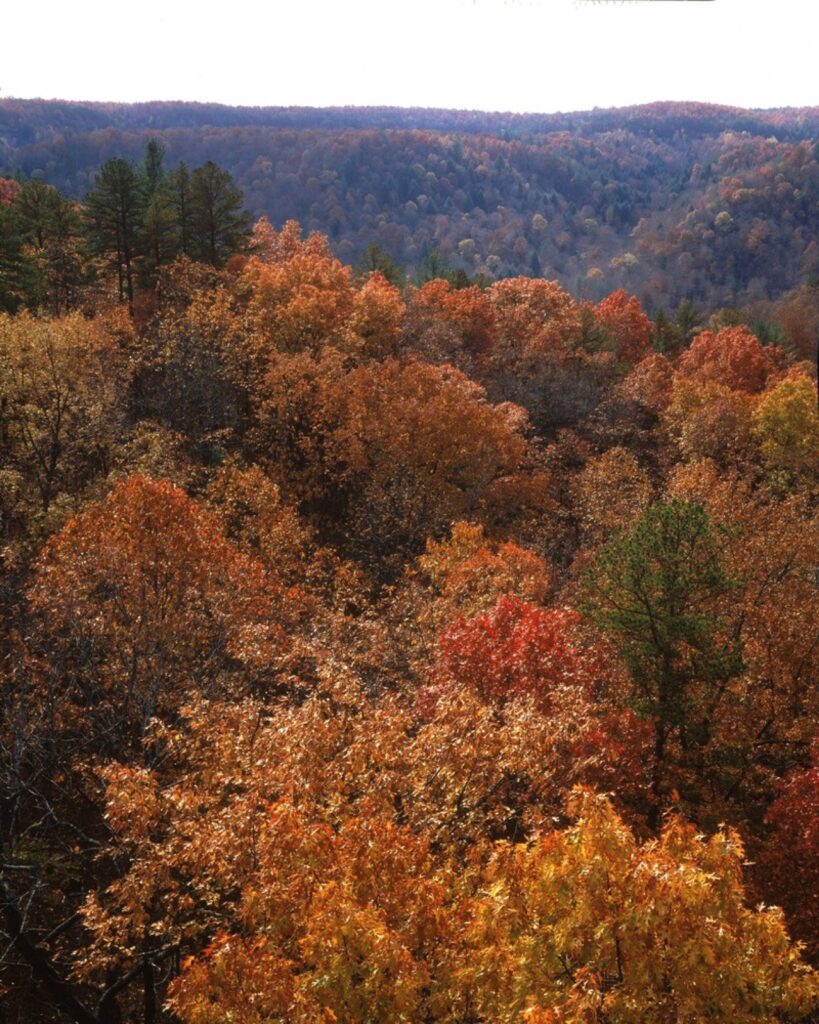
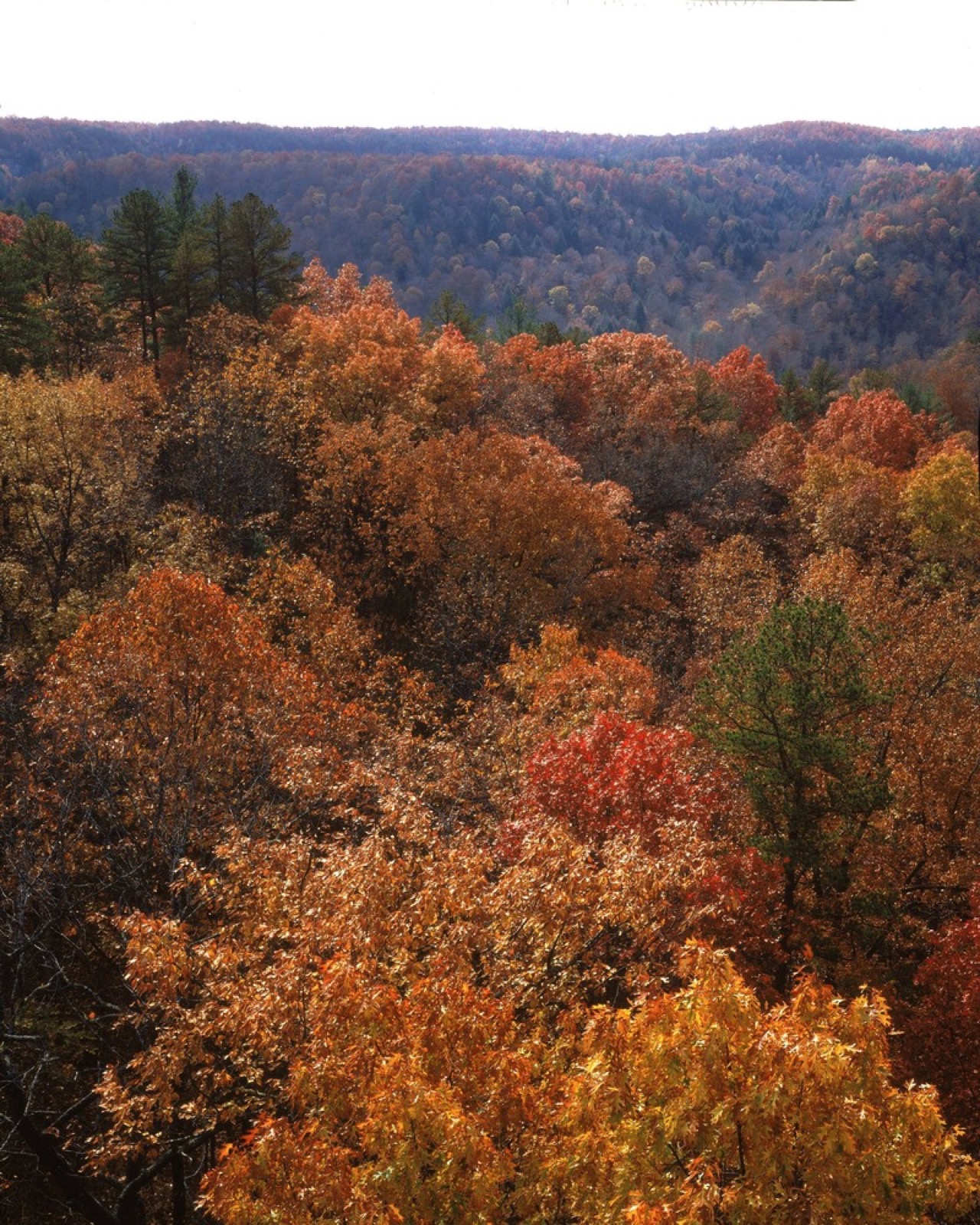
Read our guides to landscape cropping and recognizing a dominant light direction for related decisions. The featured forested-hills photograph provides a woodland setting; it is not a close-range demonstration of the suggested trunk-separation exercise.
Sources and further reading
Middle Creek Overlook, Big South Fork National River and Recreation Area. National Park Service photograph. Archival forest landscape illustration.