Two wildlife photographs by Liz Stokes offer a useful introduction to a distinctive visual relationship: the animal remains central, while its immediate surroundings contribute to the meaning of the portrait. Little Climber and Among the Moss each connect a face with a readable environment.
A supporting structure becomes part of the subject
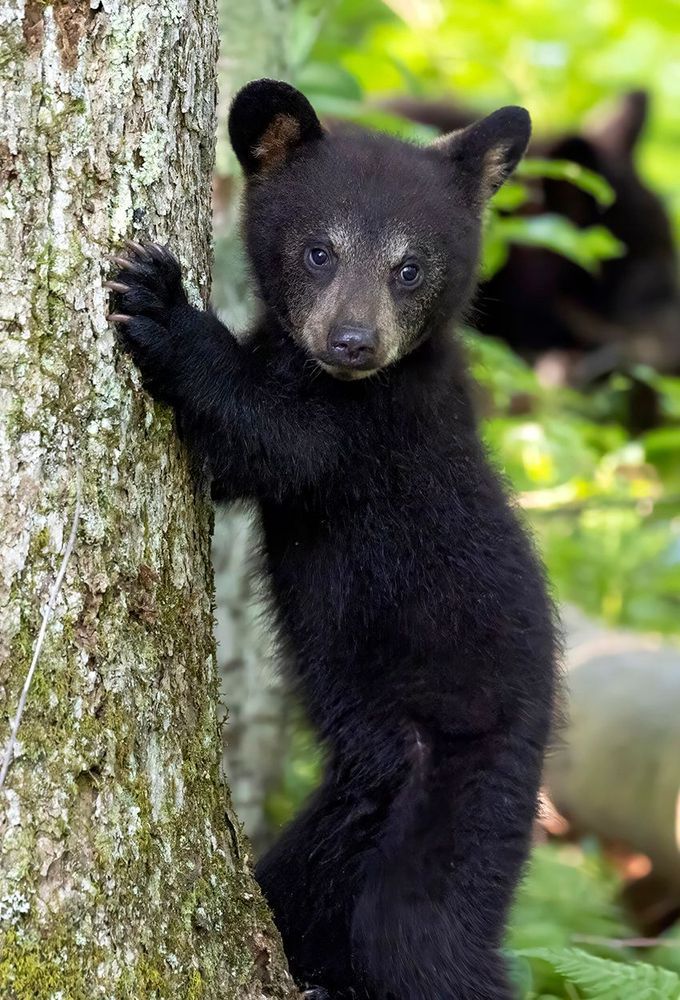
In Little Climber, the bear cub grips a tree trunk. The trunk explains the body’s position and gives the picture a strong organising shape. The animal’s contact with it is part of what makes the photograph engaging.
The image rewards a crop that preserves the relationship. A tighter face study would be a different photograph, removing some of the physical story communicated by the cub and the tree together.
Habitat supplies visual character
Among the Moss places a barred owl amid hanging vegetation. The surrounding lines create texture and a sense of place while leaving the face as the point of attention.
Seen beside Little Climber, it encourages a useful reading of Stokes’s work through these examples: the setting can help define a wildlife portrait rather than merely sit behind it.
Look closely before making a general rule
The photographs do not need to become a formula. One uses a firm vertical structure and physical grip; the other uses a web of softer lines around a perched subject. Their connection is the attention given to the animal’s relationship with its immediate world.
For photographers studying the work, the practical exercise is to preserve context deliberately. Before tightening a composition, identify what the perch, trunk or surrounding foliage contributes. Keep the parts that help the viewer understand the subject.
These pictures can be explored within the wider wildlife and landscape collection at Artistic Creationz, the photography brand of Liz Stokes and Neal Nachman. The featured image is Little Climber; photograph © Liz Stokes / Artistic Creationz.
Keep exploring
Top 10 Wildlife Photographers Turning Animal Encounters Into Fine Art