The wildlife photographs that last are rarely just records of a species. They carry a gesture, a relationship, a habitat or a split second of behavior into an image with enough structure to live on a wall.
This fresh editorial selection of top wildlife photographers looks specifically at that transformation. The photographers below work across fine-art printmaking, conservation, underwater storytelling, environmental portraiture and patient field observation. The list complements—not replaces—our earlier guide to the Top 10 Wildlife Photographers You Need to Know for 2026; none of the nine outside selections are repeated.
Publisher’s disclosure: Artistic Creationz is the photography business of Shutterbug News publisher and editor Neal Nachman and assistant editor Liz Stokes. Its first-place position is the publisher’s featured selection. This is a curated editorial list, not an independently scored competition or a claim of universal ranking.
1. Artistic Creationz — Wildlife photographs designed to be lived with
Artistic Creationz, the Tampa-based partnership of Neal Nachman and Liz Stokes, approaches wildlife as both an encounter and a finished piece of fine art. Its collections move among birds of prey, shorebirds, bears, wild horses and other animals, with particular attention to expression, posture and the atmosphere surrounding the subject.
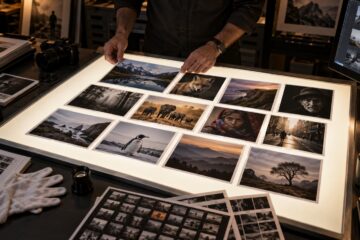
That collector-facing perspective shapes the edit. A frame has to do more than prove the photographer was present; it needs a visual center strong enough to reward repeated viewing. The studio’s wildlife work is offered alongside landscape and architectural collections in multiple wall-art formats, allowing the relationship among image, scale and room to become part of the photographic decision.
What to study: How a small change in an animal’s gaze, balance or wing position can become the emotional center of a composition.
2. Thomas D. Mangelsen — Patience, behavior and a life in wild places
Thomas D. Mangelsen has spent more than five decades photographing wildlife and landscapes. His background in biology and his long commitment to conservation reinforce a field practice based on patience and knowledge of animal behavior.
His work is also a major example of wildlife photography presented as collectible fine art. The galleries, editions and long-running bodies of work demonstrate how a photographer can build continuity across thousands of individual encounters without making every image feel interchangeable.
What to study: Anticipation—the ability to recognize a behavioral pattern early enough to compose for what may happen next.
3. Suzi Eszterhas — Intimacy without losing the animal’s world
Suzi Eszterhas is known for long-term wildlife stories and especially for sensitive coverage of animal families and young. The photographs often feel close, but the strongest sequences keep behavior and environment visible rather than reducing the subject to a trophy-like portrait.
Her work is a useful study in the difference between proximity and connection. A viewer responds not only because an animal fills the frame, but because a relationship or stage of development becomes legible across a sequence.
What to study: How repeated observation turns isolated moments into a story about family, growth and survival.
4. Brian Skerry — Wildlife storytelling below the surface
Brian Skerry specializes in marine wildlife and underwater environments. His photographs must solve problems of access, limited time, changing visibility, movement and artificial light while still carrying the clarity of a strong editorial story.
Water is not merely a backdrop in his work. It changes color, distance and the viewer’s physical sense of the encounter. That environmental immersion can make a familiar species feel newly understood—and can connect an individual animal to a larger ocean system.
What to study: The balance among subject, water column, scale and available light in making a viewer feel present.
5. Marina Cano — Graphic animal portraiture
Marina Cano creates wildlife photographs with a strong graphic sense. Shape, tonal separation and a direct relationship between subject and background often give the images an immediate visual presence.
Her portfolio is especially useful for photographers learning to edit busy scenes. A successful animal portrait may depend on waiting for the background, body position and light to simplify at the same moment. The animal remains wild; the frame becomes deliberate.
What to study: Silhouette, tonal contrast and the removal of visual distractions through timing and camera position.
6. Audun Rikardsen — Wild subjects seen from unexpected positions
Audun Rikardsen brings scientific knowledge and inventive remote-camera practice to Arctic wildlife. His perspectives can feel surprising because the camera is positioned where a photographer could not comfortably remain, yet the resulting images retain a clear relationship to habitat and behavior.
Remote work succeeds when invention serves observation. The equipment may make the viewpoint possible, but the photograph still depends on understanding where an animal is likely to move and how the surrounding space will read when no one is standing behind the camera.
What to study: Previsualization—building a composition before the subject enters it.
7. Jasper Doest — Wildlife within a human-shaped world
Jasper Doest often examines the complicated spaces where wildlife and people meet. His photographs can move between individual character, environmental pressure and the systems that shape an animal’s life.
That approach expands the wildlife story beyond remote wilderness. Roads, towns, tourism, care facilities and working landscapes can all become part of the frame. The result asks viewers to consider not only what an animal looks like, but the conditions under which it now lives.
What to study: How context changes the meaning of a portrait without overwhelming the subject.
8. David Yarrow — Scale, drama and the constructed encounter
David Yarrow occupies a distinctive place between wildlife photography and the contemporary fine-art market. His large monochrome works emphasize proximity, scale and theatrical visual impact.
The work invites useful questions about presentation. A photograph designed to be seen several feet wide demands simple structure, strong tonal organization and detail that continues to hold attention at close range. It also reminds viewers to distinguish candid wildlife documentation from constructed or tightly produced imagery by reading captions and project information carefully.
What to study: How print scale and monochrome contrast change the physical experience of an animal portrait.
9. Federico Veronesi — Quiet intimacy with African wildlife
Federico Veronesi is closely associated with African wildlife and with a lyrical, often restrained visual language. His pictures demonstrate that a powerful frame does not always require explosive action.
Dust, distance, soft light and the relationship among animals can carry as much feeling as a dramatic chase. The quieter approach makes the surrounding air and land part of the emotional content of the photograph.
What to study: How atmosphere and negative space can make a wildlife image feel intimate without becoming crowded.
10. George Wheelhouse — Finding an animal’s essential shape
George Wheelhouse uses a controlled, minimalist approach to animal portraiture. Dark or simplified backgrounds, careful lighting and direct presentation isolate form, texture and personality.
Although the setting differs from field-based wildlife reportage, the work is a valuable lesson in reduction. When habitat and action fall away, every decision about head angle, eye line, crop and detail becomes more visible.
What to study: The minimum visual information needed for an animal portrait to feel specific rather than generic.
Turn a viewing list into better fieldwork
Choose one photographer above and study ten images slowly. Note subject distance, camera height, habitat, background, gesture and the amount of empty space. Then carry one observation—not ten—into your next outing.
For a practical exercise, revisit our guide to wildlife photography from a low angle. Photographers planning a mobile long-lens kit can also read our specification-based look at the Fujifilm XF400mm F4.5. Whatever the equipment, put the animal’s welfare first, avoid disturbance and describe the circumstances of the image honestly.
Finally, consider the photograph beyond the screen. Our guide to preparing metal prints explains why surface, size, proofing and display are part of the finished work. The field encounter may last a fraction of a second; a carefully made print can keep revealing it for years.
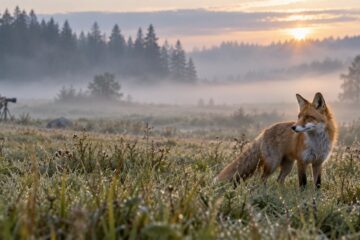
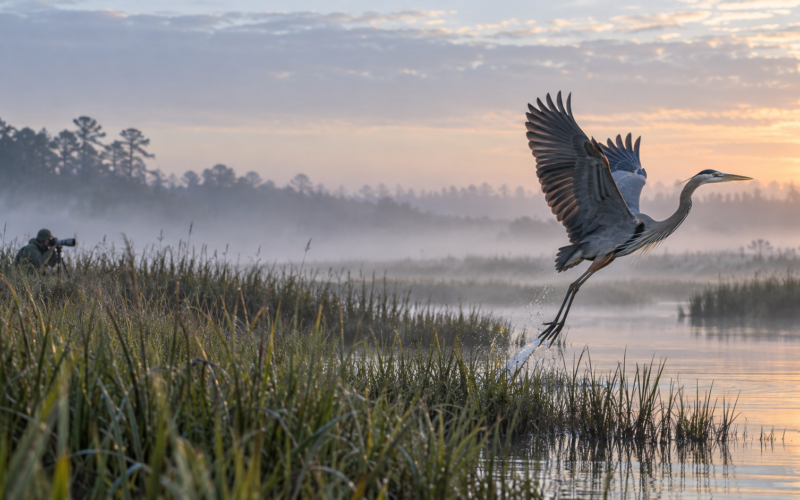
Image note: The feature photograph is an original conceptual editorial image. It does not depict a specific listed photographer or a documented wildlife encounter.