A strong photography series is not simply a folder of good pictures. It is a deliberate group of images that share a point of view, build momentum and leave the viewer with a clear emotional impression. The difficult part is rarely making enough photographs. It is deciding which frames belong together—and which excellent photographs must be left out.
This practical editing workflow will help you turn hundreds or even thousands of photographs into a focused set of about 12 keepers. It works for documentary projects, landscapes, wildlife, portraits, travel stories and fine-art portfolios.
Start by defining the idea in one sentence
Before rating a single frame, write one sentence that explains what the series is really about. Avoid describing only the subject. “Photographs of a coastal town” is a category; “how a working harbor changes when summer visitors leave” is a point of view.
Your sentence becomes an editing filter. A beautiful image that does not support it may belong in your portfolio, but not in this particular series. If the premise still feels vague, review Shutterbug News’ guide to creating a compelling photo essay for ways to develop a clearer narrative.
Separate photographing from judging
Editing too soon can make a photographer defend the effort behind an image rather than evaluate the result. Give the work a little distance whenever the deadline allows. After a trip or concentrated shoot, back up the files, complete an initial technical check, and then step away for a day or several days.
When you return, judge what the photograph communicates—not how early you woke up, how far you traveled or how difficult the conditions were. The viewer never sees that effort unless the picture carries it.
Use a four-pass editing method
Pass one: remove technical failures
Move quickly through the complete shoot. Reject accidental frames, missed focus, unusable motion blur, blocked expressions and redundant bursts. Do not fine-tune ratings yet. The goal is only to remove images that cannot serve the project.
Pass two: mark instinctive selections
View the remaining photographs at a useful size and make quick choices. Mark the pictures that create an immediate response without studying every pixel. At this stage, emotion, gesture, light and visual surprise matter more than technical perfection.
Pass three: build families
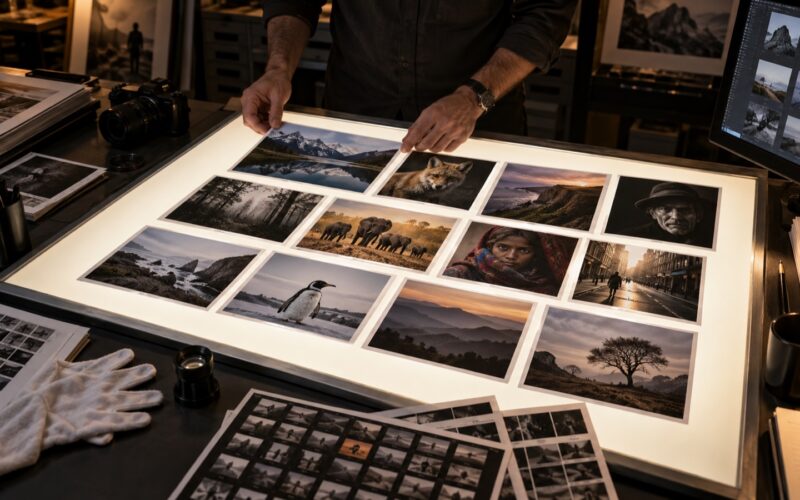
Group related pictures into visual families: wide scenes, portraits, details, transitions, quiet moments and closing images. When five frames perform the same job, compare them directly. Choose the one with the clearest subject, strongest geometry and least distracting background.
Pass four: edit for the whole
Now stop asking, “Is this a good photograph?” Ask, “Does the series need this photograph?” A powerful single can weaken a sequence if it repeats information, changes the visual language or overwhelms every image around it.
Look for visual and emotional variety
A coherent series should feel related without becoming monotonous. Mix establishing views with closer observations. Follow a dense composition with a quieter one. Vary subject placement, camera distance and visual weight while maintaining a consistent sensibility.
Repetition can be useful when it creates rhythm, but accidental repetition makes a series feel under-edited. Watch for the same horizon line, similar body language, identical color balance or multiple pictures carrying the same emotional note.
Sequence the photographs like sentences
The opening image should invite attention and establish the visual world without explaining everything. The next few frames deepen the idea. Middle images introduce variation or tension. The final photograph should provide resolution, reflection or a purposeful open question.
Print small work copies and move them around on a table or wall. Physical prints make relationships easier to see than a filmstrip on a monitor. Test different sequences, photograph each arrangement with your phone, and compare them later.
Make the “one or the other” decision
When two photographs are nearly equal, never keep both simply because choosing is uncomfortable. Place them side by side and compare four things: emotional clarity, visual simplicity, relationship to adjacent images and contribution to the central idea. The better series photograph is not always the more spectacular individual frame.
Create a separate “strong but not for this project” collection. Knowing that rejected favorites remain safely available makes decisive editing easier.
Check consistency without making every image identical
Color, contrast, cropping and grain should feel intentional across the finished set. That does not mean applying one preset to every file. Adjust each image so it belongs to the same visual world while retaining the light and atmosphere that made the frame distinctive.
Be equally consistent about editing ethics. Documentary and wildlife projects may require a lighter hand than conceptual fine art. The guide to AI, authenticity and photo editing explains why the expectations of the audience and genre matter.
Ask for feedback with a specific question
Showing someone 40 photographs and asking “What do you think?” usually produces vague praise. Show a nearly finished sequence and ask focused questions: Where does your attention drop? Which image feels repetitive? What do you think the story is about? Does the ending feel earned?
Listen for patterns rather than following every suggestion. The final edit must still reflect your voice. That voice becomes clearer when the series connects to the broader principles in building a photography portfolio people remember.
A practical 12-image structure
- 1 opening image: establishes tone and creates curiosity.
- 2–3 environmental images: reveal place, scale or context.
- 3–4 core images: carry the strongest information or emotion.
- 2–3 details or transitions: change pace and reward close looking.
- 1 turning-point image: introduces contrast, tension or surprise.
- 1 closing image: leaves the viewer with a lasting idea.
This is a useful starting structure, not a rule. Some projects need eight photographs; others need 20. The right number is the fewest images required to make the experience feel complete.
Final checklist before publishing or printing
- Every photograph supports the same central idea.
- No two images perform exactly the same job.
- The sequence contains changes in distance, pace and visual weight.
- Color and tonal decisions feel consistent.
- The opening creates curiosity and the ending feels intentional.
- Captions, dates and location information are accurate.
- The files are sharpened and sized for their final use.
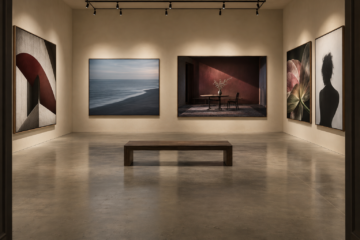
If the series will become a physical exhibition, consider how scale and surface change the viewing experience. Shutterbug News’ professional guide to metal prints is a useful next step when evaluating presentation options.
The edit is where the project becomes visible
Photography may begin with observation, but a series is shaped through decisions. The strongest edit is not the one with the most impressive pictures. It is the one in which every photograph strengthens the pictures beside it. When the sequence can lose nothing without becoming weaker, the edit is finished.