When one side of a subject or a nearby background is much darker than expected, another lamp is not always the first useful adjustment. Change the distance relationship and watch what happens. Light falloff is a practical tool for deciding how evenly the scene should be illuminated.
Begin with a simple comparison
Use a stationary subject and a plain background. Keep the camera position, light direction and room lighting fixed. Make a reference photograph, then move the light farther from the subject while keeping its direction as similar as possible. Adjust output or exposure to restore the subject’s brightness before comparing the background.
For an ideal point source, illumination decreases with the square of distance: doubling the distance gives one quarter of the illumination, a two-stop difference. A large modifier at close range does not behave exactly like that ideal source, so treat the equation as a guide and check the actual setup.
Compare relative distances
Notice how far the background is from the light compared with the subject. A small movement can have a pronounced effect when the light is close. With the light farther away, the subject-to-background distance may represent a smaller proportional change in the total light path.
broncolor’s single-softbox example uses distance to adjust the background’s brightness and describes distance as a control over falloff. Make your own comparison rather than copying a distance from a photograph of someone else’s studio.
Keep softness and falloff separate
Moving a modifier also changes its apparent size from the subject’s viewpoint. That can change shadow quality while you are evaluating brightness. Record both observations so a smoother brightness gradient is not confused with softer shadows.
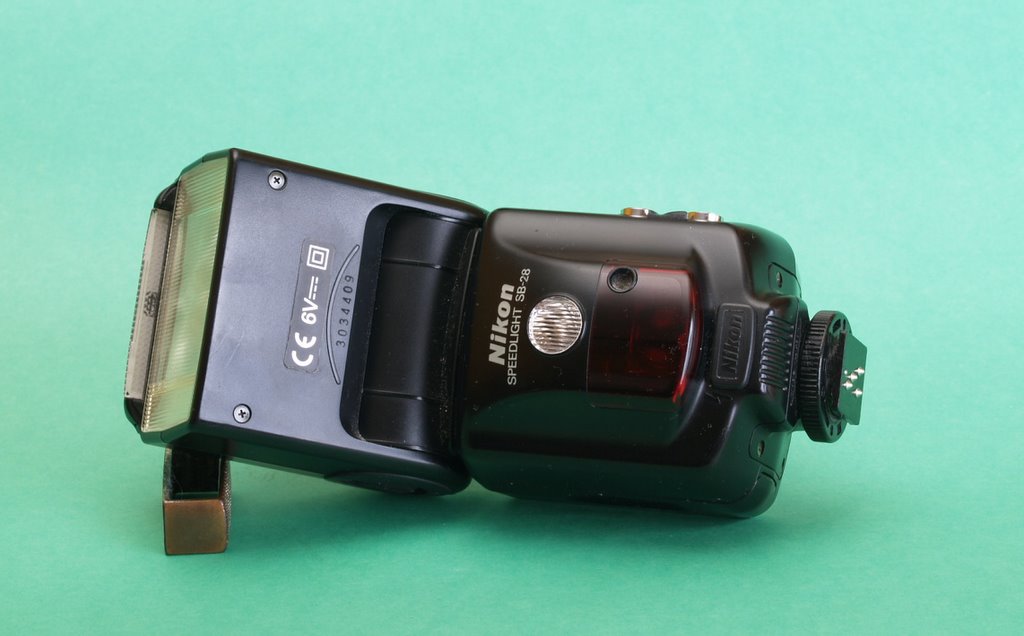
Save the reference frames and a short setup note with distances measured from consistent points. Read our guides to softboxes and umbrellas and one-direction lighting for related choices. The Nanlite product image illustrates studio equipment; it is not a measured falloff test or a claim about a particular lamp’s output.
Sources and further reading
Archive product photograph: Nanlite. Continuous studio lights shown as an equipment illustration, not as the source of the hypothetical measurement exercise.