An owl in a moss-draped tree presents two subjects at once: the bird and the tangle that makes its shelter. The challenge is deciding which branches explain that setting and which simply interrupt the photograph. Solving that problem begins with observation from a respectful distance.
Separate the face from the busiest lines
Study the outline around the eyes and bill. A bright twig crossing a dark facial disk may draw attention before the owl does. If there is a safe, permitted route, a modest sideways movement can change that overlap without requiring a closer approach. Compare the face, perch and background together before settling into position.
Do not clear vegetation or disturb the bird for a cleaner photograph. If the angle is blocked, the available photograph may be an environmental view, a partly hidden portrait or no photograph at all. That is a compositional decision with a real boundary.
Focus on the visible subject
Foreground leaves can distract autofocus, especially when they occupy more of the selected area than the owl. Use an appropriately placed focus area and verify the eye at enlarged playback. When the subject remains still, carefully applied manual focus can offer another route through the obstruction.
An out-of-focus branch does not automatically disappear. Close foliage may become a soft wash, but a bright patch can still pull the eye. Check the whole frame at normal viewing size after checking sharpness.
Let the habitat carry part of the story
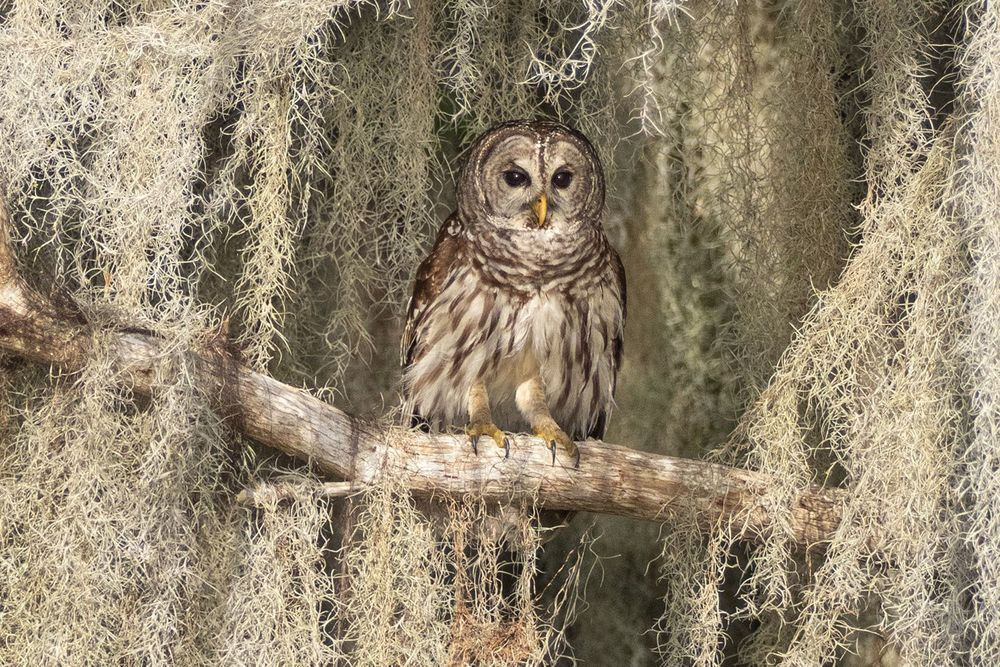
In Liz Stokes’s Among the Moss, the hanging vegetation gives the perched barred owl a strong sense of place. The useful lesson is visible in the picture itself: the surrounding shapes can support a portrait when their arrangement leads the viewer toward the bird.
Make a wider composition before considering a tighter crop. A photograph with breathing room may preserve more of the encounter’s character, particularly when the foliage repeats the curves and vertical lines of the perch. For field conduct, the National Park Service’s wildlife photography guidance emphasises patient observation and appropriate distance.
Keep exploring
The Photograph Before the Photograph: Learning Wildlife Behavior