A wildlife portrait often becomes stronger when the viewer can understand what supports the animal. A trunk, rock or branch supplies scale and direction, connecting a face to the surrounding world. Instead of treating that structure as clutter, consider making it part of the design.
Read the supporting shape
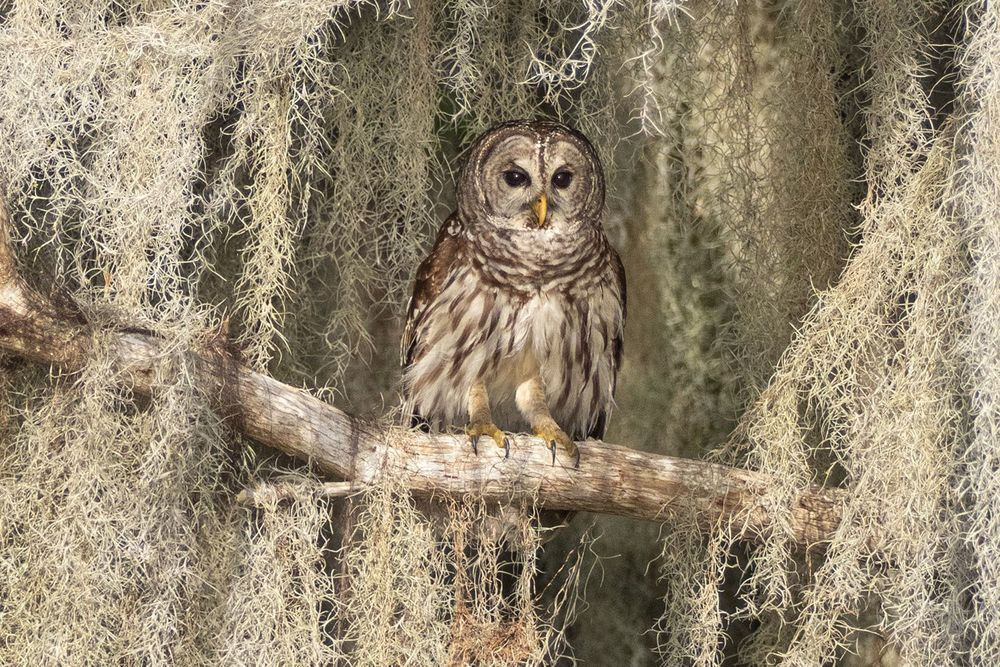
Look at the perch before deciding on the crop. Does a trunk divide the frame, a branch point inward or a rock form a stable base? A clear supporting line can guide the viewer toward the animal without requiring a dramatic background.
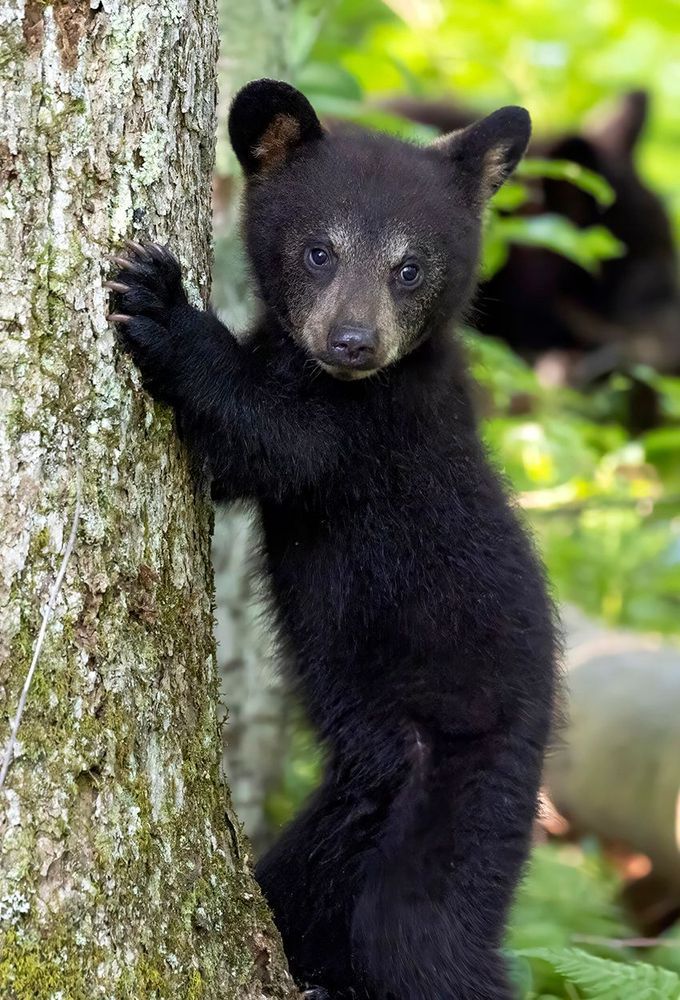
Liz Stokes’s Little Climber provides a useful example. The bear cub’s grip and the tree trunk belong to the same visual idea. Remove too much of the tree and the image would lose part of what makes that posture readable.
Allow room for the gesture
A tightly cropped face can be compelling, but it may hide the action that gives a portrait meaning. Check paws, feet, tail and the contact point with the perch. Decide which elements explain the animal’s position, then leave enough space around them to avoid an accidental-looking cut.
Make this choice in the viewfinder when possible. A wider original gives some flexibility later, while a cut-off contact point cannot be restored by simply changing the crop.
Wait for a readable relationship
Once the composition is established, watch for small changes in the angle of the head or the placement of a foot. A brief separation between the face and a dark branch can be more important than another burst of nearly identical frames.
Do not coax an animal onto a preferred perch or move closer to manufacture the relationship. The National Park Service recommends quiet observation and suitable distance. Let the available setting determine what can be photographed.
During the edit, compare the complete silhouette before judging fine detail. Choose the frame in which the animal’s posture and its support read together. A portrait can feel intimate because its structure is clear, even when it was made from a distance.