The brightest sunset color is often treated as the end of a landscape session. Yet the quieter period that follows can create a more deliberate photograph, with a warm horizon beneath a cooler sky and foreground shapes reduced to their essentials.
Find a shape that survives the darkness
When surface detail fades, the outline carries more of the composition. A bare tree, a headland or a rock formation can become the anchor. Walk through the available viewpoints while there is still enough light to judge footing, then choose a position that separates the main shape from neighboring forms.
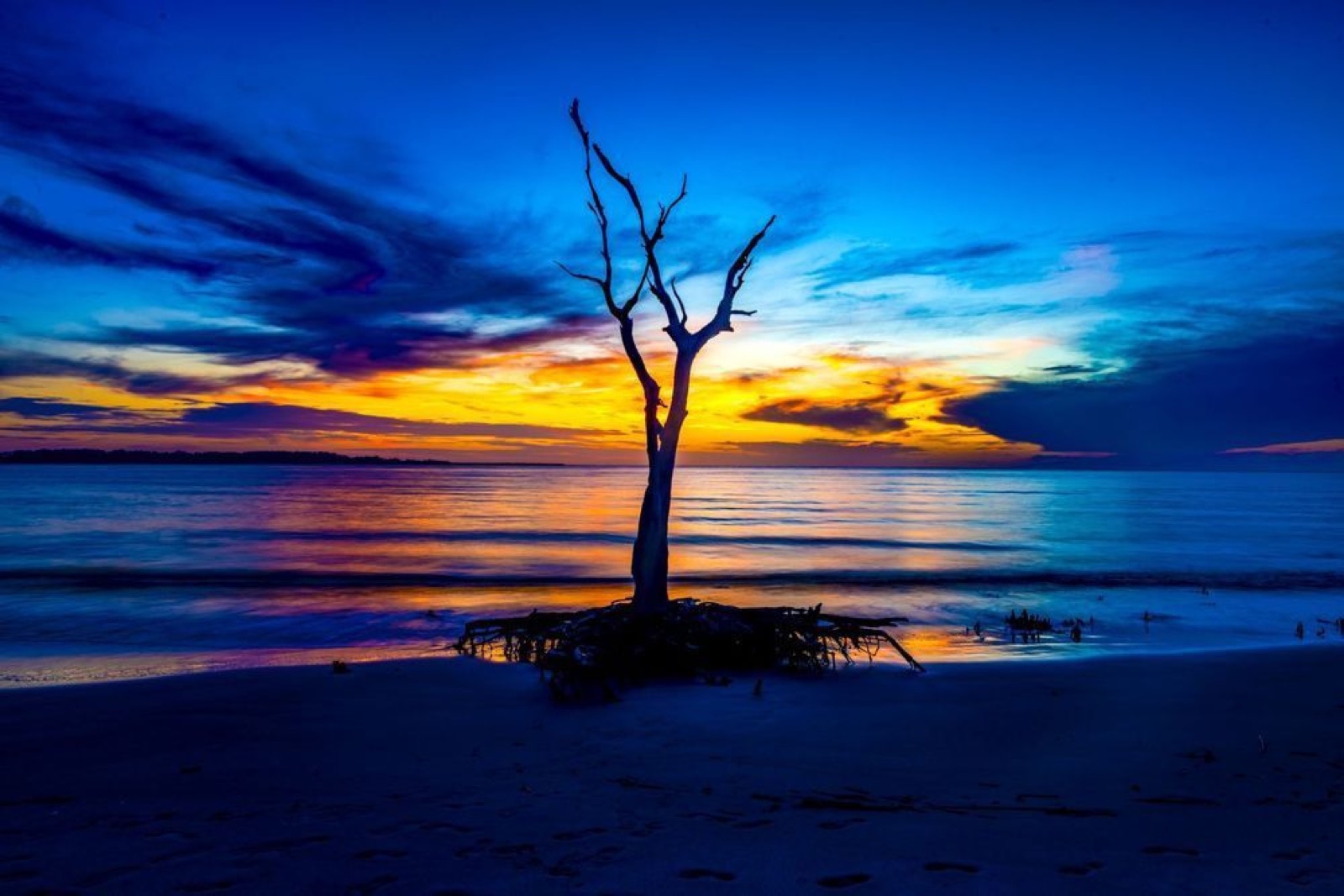
In Neal Nachman’s Dusk at the Boneyard, the dark tree gives the colored sky a distinct structure. The lesson lies in the relationship: the silhouette occupies the frame as a shape, while the sky supplies contrast and atmosphere.
Keep the bright band from taking over
The narrow horizon may be much brighter than the foreground. Check the histogram and highlight display rather than trusting a luminous rear screen in the dark. Nikon’s histogram guide explains why the distribution of tones provides a useful second view of the exposure.
A silhouette does not need to contain readable detail everywhere. Decide which dark areas should remain graphic and which need separation. That choice can simplify both exposure and the later edit.
Preserve the color relationship
During processing, compare the cool upper sky with the warmer horizon before increasing saturation. If every color becomes equally intense, the subtle transition that attracted you may disappear. Inspect the dark edge of the tree for bright halos after local adjustments.
Make a small final version and view it against a neutral background. The composition should still work when the display is no longer filling your vision. If the silhouette remains clear and the horizon holds attention without overwhelming the frame, the quieter minutes after sunset have done their work.
Keep exploring
Beyond Golden Hour: Finding Beautiful Photographs in Unexpected Light