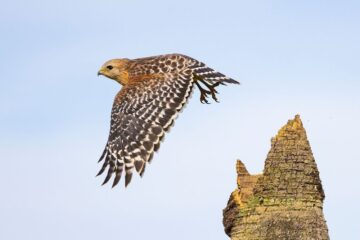
Remove a distracting object. Extend a composition to fit a magazine cover. Replace a flat sky with something more dramatic. Tasks that once required patient manual work can now begin with a selection and a prompt. The speed is new. The responsibility for what an image tells its audience remains with the photographer.
In 2026, the most useful debate about AI photo editing is increasingly specific. Which parts of a picture were recorded? Which were reconstructed or invented? What does the caption invite a viewer to believe? A meaningful standard has to answer those questions more precisely than a simple declaration that AI was, or was not, involved.
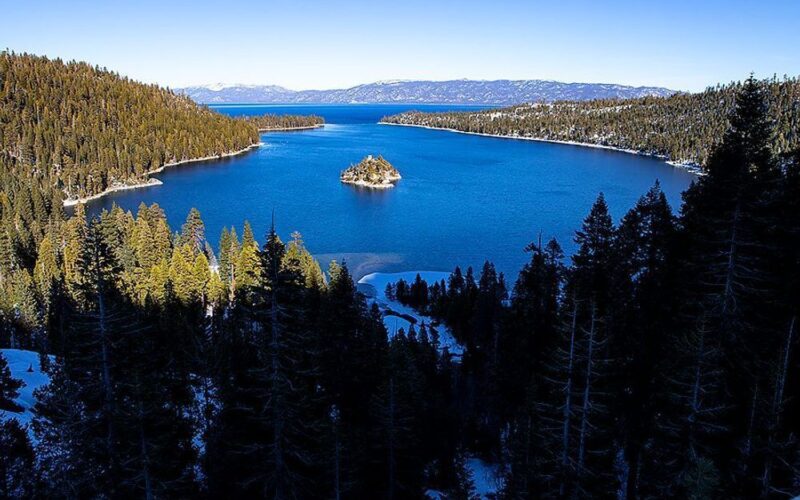
Opening photograph: Emerald Winter, Lake Tahoe, by Neal Nachman / Artistic Creationz. The editing scenarios below are hypothetical examples, not descriptions of changes made to this photograph.
AI has entered ordinary finishing work
Adobe’s June 2026 research report offers a useful, qualified snapshot. Among the US photo professionals it surveyed, 57.6 percent reported substantial use of generative AI to remove distracting background elements. The broader research included a 1,433-person survey of creatives in the US and UK, along with other studies; that total should not be read as the number of photographers surveyed.
These are findings from a software vendor’s research, rather than a census of the profession. Still, they place the discussion inside familiar working routines. The ethical decision may arrive while cleaning up a background, long before anyone considers producing an entirely synthetic image.
The capability also extends beyond removal. Adobe’s current Lightroom documentation describes Generative Expand as a way to extend a photograph beyond its original boundaries. Those added areas are generated content. However plausible the result, the tool does not recover a record of what the camera would have seen outside its frame.
Start with the promise the picture makes
A news photograph, an advertising illustration, and a surreal fine-art composite can all be accomplished images. Their audiences may reasonably expect different relationships to an observed event. The photographer’s first task is to understand that expectation before editing begins.
Consider a hypothetical crowded beach photograph. Removing a person from an editorial image about public access changes the evidence. Removing that person from a clearly identified creative composite serves a different purpose. The pixels may undergo the same operation, but the published claim is different.
Context does not make every commercial alteration acceptable automatically. A client may expect an accurate depiction of a product, property, or location. Agree on the boundaries of the assignment in plain language: whether objects may be removed, whether backgrounds may be generated, and how the finished work will be identified. A vague instruction to make an image look better leaves too much room for conflicting assumptions.
Judge the effect, not just the tool’s label
AI-assisted selection and generated scene content should not be treated as interchangeable. A tool might identify the sky so a photographer can adjust its brightness; another might replace that sky with an invented sunset. Knowing that both involve AI tells a viewer very little about what happened.
The same distinction applies to conventional tools. Manual cloning can remove evidence. Cropping can exclude essential context. Heavy tonal changes can conceal information even when no new object is introduced. Responsible editing requires examining the result and its meaning, rather than relying on the reputation of a particular technique.
Ask whether an edit changes who was present, what occurred, where it occurred, or the conditions under which it was photographed. For observational work, those questions are especially useful. A visually minor deletion may have a larger effect on meaning than a conspicuous color adjustment.
Documentary standards are specific
The National Press Photographers Association’s Best of Photojournalism visual guidelines provide a clear example of strict documentary expectations. They prohibit adding, moving, or removing people and objects, including expanding the canvas, while allowing limited conventional adjustments within stated boundaries. These are the contest’s rules; photographers should also consult the requirements of the publication or assignment receiving their work.
A disclosure does not automatically make an otherwise prohibited edit eligible for a documentary competition. Labeling a generated sky honestly may clarify an illustration, but it does not turn the image back into an unaltered record for a category that forbids the change.
For fine-art work, a useful practice is to distinguish a photograph developed from a capture from a constructed image assembled through additional sources or generation. The description can be brief. It should give the viewer enough information to understand the nature of the work without requiring a technical interrogation.
Write disclosures that describe the change
General phrases such as “digitally enhanced” can cover almost anything. Where an alteration matters, name it. A hypothetical caption might read, “Creative composite; the sky was generated and the foreground was photographed.” Another could say, “The background was extended with generative software for this illustration.”
Put material context where the image is encountered. A disclosure on an unrelated policy page may never reach the person viewing a single photograph or a shared crop. Captions, nearby labels, and delivery notes can work together, particularly when a picture will circulate in several formats.
Keep the language proportionate. Readers do not need a list of every slider movement to understand a straightforward tonal adjustment. They do need to know when an apparently observed subject or event contains a significant invention. Specificity helps preserve that distinction.
Understand what Content Credentials establish
The Content Authenticity Initiative describes Content Credentials as a way to attach tamper-evident information about a digital asset’s origin and history. Depending on the tools and information supplied, a record can identify aspects of creation or editing and help a viewer inspect provenance.
That record is not a universal certificate of factual truth. A documented camera capture can depict a staged scene, and credentials can accompany generated imagery. Their value lies in providing inspectable history, not in replacing the judgment required to evaluate the subject, caption, and source.
Nor should an absent credential be treated, by itself, as proof that a photograph was generated. A viewer still needs context. Provenance systems are useful evidence within a broader process of verification; they cannot resolve every ambiguity surrounding an image.
Build an editing practice you can explain
Preserve original captures and keep significant creative variants distinct from versions intended for documentary use. Record consequential changes while making them, when the details are easy to remember. Before delivery, compare the final image with the assignment and confirm that the caption matches the work actually supplied.
This review should include more than visible generation errors. A technically seamless alteration may create the most serious misunderstanding precisely because nobody notices it. Ask what a reasonable viewer would infer from the completed photograph, then decide whether the image and its accompanying words support that inference honestly.
Creative freedom and accountability can coexist. Photographers can explore unfamiliar visual possibilities while being clear about the kind of work they have made. The durable professional advantage is the ability to explain a picture’s origins with the same care used to shape its appearance.
Sources: Adobe, “How AI Is Redistributing Creative Work” (June 2026); Adobe Lightroom help, “Extend Photos with Generative Expand” (updated August 13, 2026); NPPA Best of Photojournalism visual guidelines; Content Authenticity Initiative, “How It Works.” Reviewed September 12, 2026. Photograph courtesy of Artistic Creationz; Neal Nachman also publishes Shutterbug News.