
A single photograph can hold attention through an expression, a gesture, or an extraordinary arrangement of light. A photo essay asks it to do something more difficult: contribute to an experience that unfolds across several images.
That shift changes both the way a photographer works and the way the final pictures are edited. The strongest frame may not explain the setting. The most informative image may not belong at the beginning. A small detail that seemed secondary during the shoot can become the connection that allows a reader to understand the whole.
Creating a compelling photo essay begins with a question worth pursuing and continues through careful decisions about what to show, what to leave out, and what each image allows the next one to mean.
Opening photograph: Serrated Surge, by Neal Nachman / Artistic Creationz. This and the other portfolio photographs below are used for a visual sequencing exercise; they are not presented as a documentary record of one location, date, or outing.
Find a question inside the subject
“The coast” is a subject. “How does a working harbor change between the first arrivals and the departure of its boats?” is the beginning of a story. The second formulation suggests people, activity, transitions, and a useful span of time.
A question need not be complicated or grand. It might concern the preparation behind a community event, the changing appearance of a neighborhood garden, or the routine of a craftsperson. Choose something you can observe closely enough to move beyond its most obvious surface.
Write a short working description before photographing. Identify what you already know, what you need to learn, and which photographs might make that learning visible. Treat this as a starting point. If observation reveals a more interesting or more accurate story, allow the project to change.
Photograph relationships as well as subjects
An establishing image helps a reader understand where the story takes place. It does not have to be an enormous panorama. A room with its occupant and tools may establish a story more effectively than an exterior of the building.
Then move closer. Look for the relationship between a person and an activity, an object and its surroundings, or one stage of a process and the next. A detail should provide information that the wider view cannot: worn handles, a handwritten schedule, or the accumulated marks of repeated work.
Vary distance thoughtfully. A sequence made entirely of tight frames can feel ungrounded; one made entirely of broad views may keep the reader outside the experience. Changes in scale let you alternate explanation with intimacy.
Work toward moments, not just coverage
A list of desirable images can prevent omissions, but it cannot predict the most revealing moment. In a hypothetical harbor assignment, the arrival of a boat might provide action, while a quiet exchange on the dock reveals something about the people involved. Both deserve attention.
Spend time observing what repeats and what changes. Learn the rhythm of an activity so you can anticipate without directing it. A photograph of a process often becomes clearer when made at the instant the action can be understood, rather than at the instant it looks busiest.
Keep notes while the facts are available. Record names, places, dates, and the context of activities you may later caption. If a portrait is directed, describe it accordingly. Do not ask people to recreate an event and then present the result as an unprompted documentary moment.
Use a visual sequence as a learning exercise

The three Artistic Creationz photographs shown here offer a way to practice sequencing without pretending to report a shared event. Begin with Golden Driftwood, where a sweeping branch, open water, and bright sky establish a broad visual world.
Follow it with Serrated Surge, the rocky shoreline photograph at the top of this article. Attention shifts toward the shapes of the rocks and the water moving between them. The repeated presence of sea and sky provides continuity, while the foreground introduces a different texture and arrangement.
Finally, consider Dusk at the Boneyard as a quieter closing image. A single branching silhouette replaces the more complicated foreground. The progression can move from breadth to texture to simplicity. This is an exercise in visual relationships, not proof of a chronological journey.
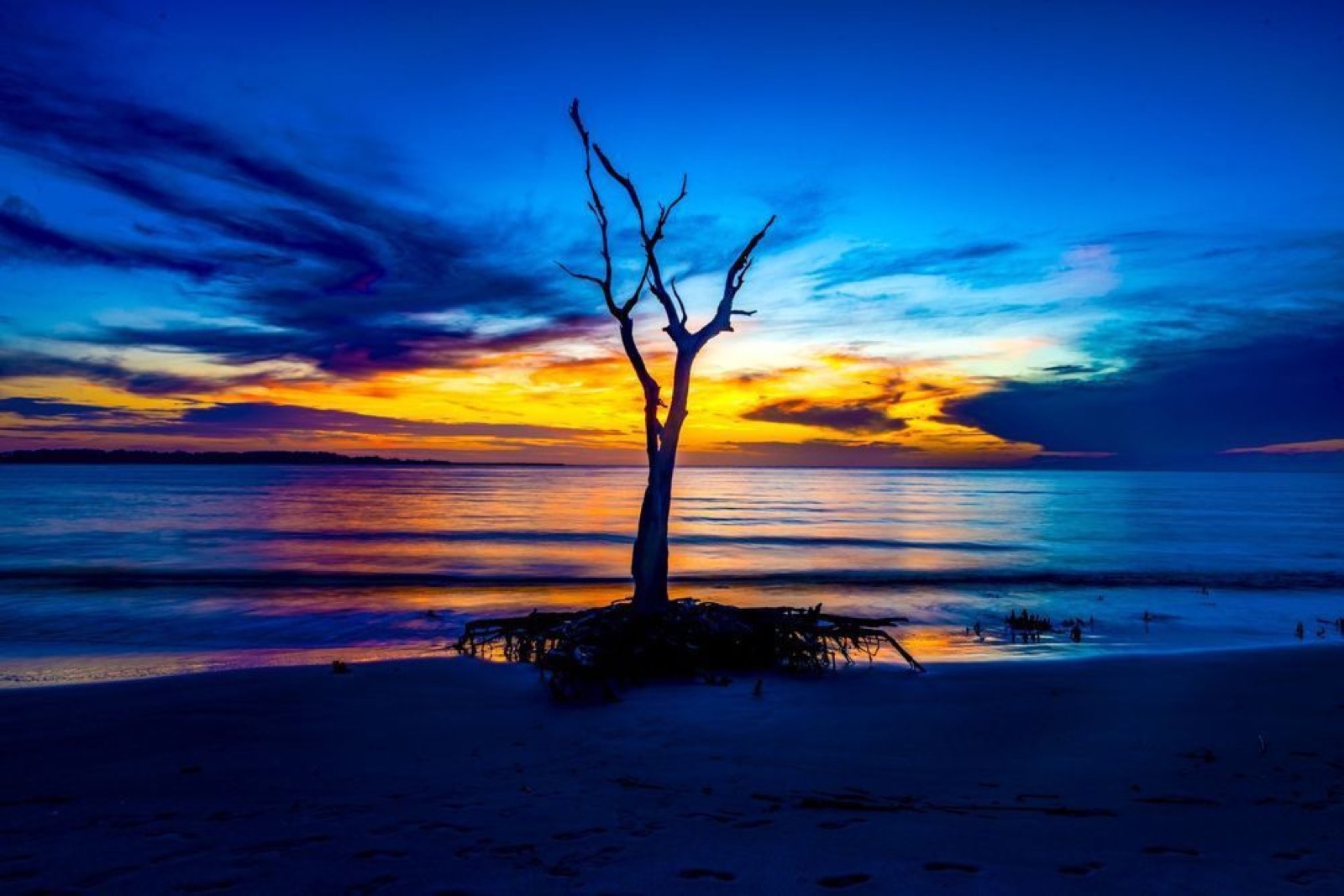
Edit for what each photograph contributes
Make a generous initial selection, then assign each image a purpose. Does it establish place, introduce a person, reveal an action, add a telling detail, or change the reader’s understanding? A beautiful picture that adds no new information may be weakening the essay by delaying its movement.
Compare similar images together. Choose the one with the clearest relationship or most revealing moment, even if another was harder to make. The reader cannot see the effort required to obtain a photograph; that effort should not decide its position.
Lay out small prints or thumbnails so the entire sequence is visible. Look for stretches where scale, viewpoint, or emotional intensity remain unchanged. Repetition can be expressive when it is intentional, but accidental repetition often makes a story feel longer than its content warrants.
Make transitions carry meaning
Two neighboring photographs create a relationship, whether you intend one or not. A face followed by a damaged object may suggest responsibility or concern. A crowd followed by an empty room may imply an event has ended. In documentary work, those implications need to be supported by the facts.
Visual transitions can also be gentler. A repeated color, a similar gesture, or a line that continues across adjacent frames can help the reader move through the story. Use these connections to improve clarity without allowing visual elegance to distort chronology or context.
Try several openings. An action image may create immediate curiosity, while an establishing view may make a complex subject easier to enter. The right choice depends on what the reader needs to understand first. There is no requirement to begin with your most dramatic standalone photograph.
Write captions that earn their space
A useful caption adds verified information. It identifies people where relevant, explains an activity, and supplies the place or time needed to understand it. It should not merely describe what is already obvious or invent an emotion from a facial expression.
Distinguish observation from interpretation. If someone appears tired, that does not establish how long they have worked. If a room is empty, that does not establish why. Ask, verify, and use precise language rather than filling gaps with a plausible narrative.
Before publishing, read the essay once without captions and once with them. The pictures should carry a meaningful visual experience, while the words keep that experience properly grounded. Check that a mobile layout preserves image order and keeps every caption beside the photograph it explains.
A photo essay succeeds when the reader understands something that no individual frame could fully convey. The final picture may offer resolution or leave a thoughtful question open. Either way, the sequence should feel earned through observation, selection, and a clear respect for what the photographs actually show.
Photographs courtesy of Artistic Creationz, credited to Neal Nachman, who also publishes Shutterbug News. The harbor assignment and caption scenarios are illustrative examples, not reported events. Documentary context: NPPA Best of Photojournalism visual guidelines, reviewed September 12, 2026.