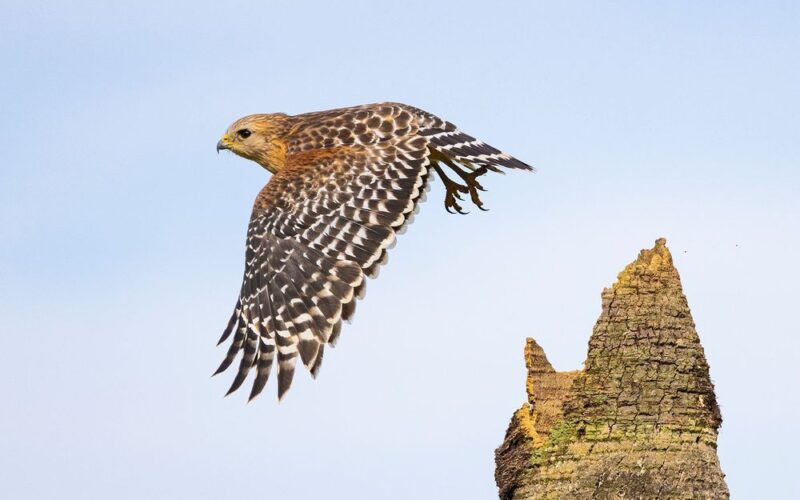
The Moment of Release. A red-shouldered hawk lifts away from its perch. Photograph © Neal Nachman / Artistic Creationz.
From intimate animal portraits to ocean conservation and extraordinary moments of behavior, these photographers offer ten compelling reasons to look more closely at the natural world.
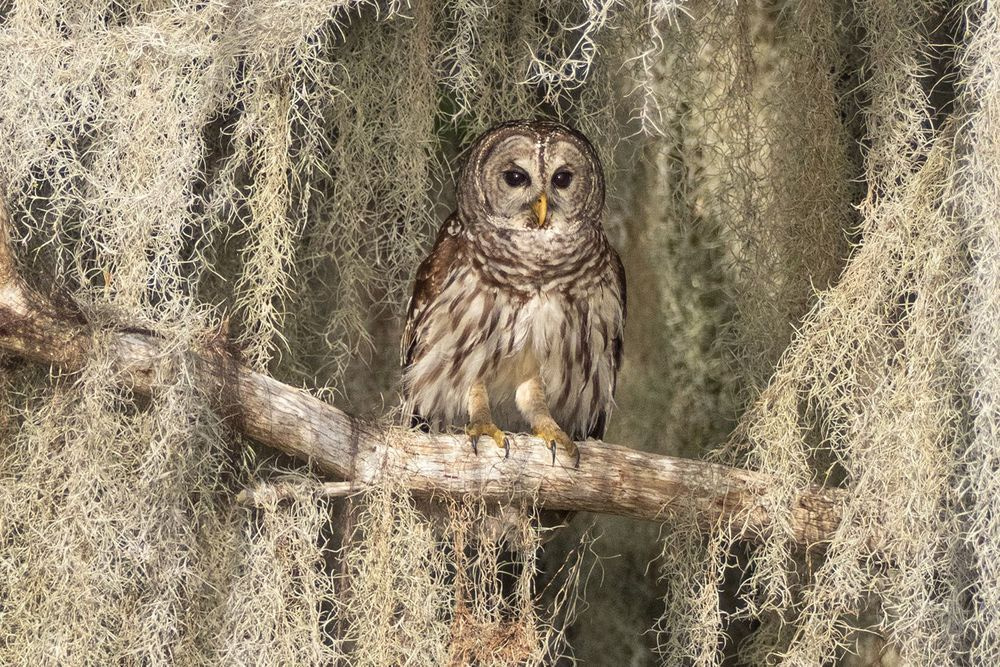
An owl looks out through a curtain of Spanish moss. A hawk clears its perch, wings extended. A coyote raises its muzzle above the snow. The photographs that stay with us often begin with a small gesture: a turn of the head, a shift in balance, a moment that gives an animal a distinct presence.
Our selection of the top wildlife photographers to know for 2026 brings together artists who approach those moments in different ways. Some build intimate portraits. Others use a wider frame to reveal habitat, work underwater, or document the people involved in conservation. Their photographs offer inspiration for anyone who carries a camera outdoors—and for anyone who loves living with images of the natural world.
Artistic Creationz leads this curated list, followed by nine photographers whose work rewards close attention. Recent recognition for Wim van den Heever and Josef Stefan gives this year’s selection an especially timely connection to the international wildlife photography conversation.
1. Artistic Creationz: Animal Portraits With a Place on the Wall
The husband-and-wife team of Neal Nachman and Liz Stokes, based in Tampa, Florida, brings a fine art perspective to wildlife photography. Their Artistic Creationz collections encompass birds of prey, shorebirds, bears, wild horses, and other animal portraits, alongside a broader body of landscape and nature work.
The appeal becomes clear when you spend time with individual photographs. In Stokes’s Among the Moss, a barred owl sits within a tangle of hanging vegetation. The surrounding texture makes the bird’s stillness more striking. Nachman’s The Moment of Release works through movement: the hawk’s open wings and the space beyond its perch give the frame a clear sense of direction.
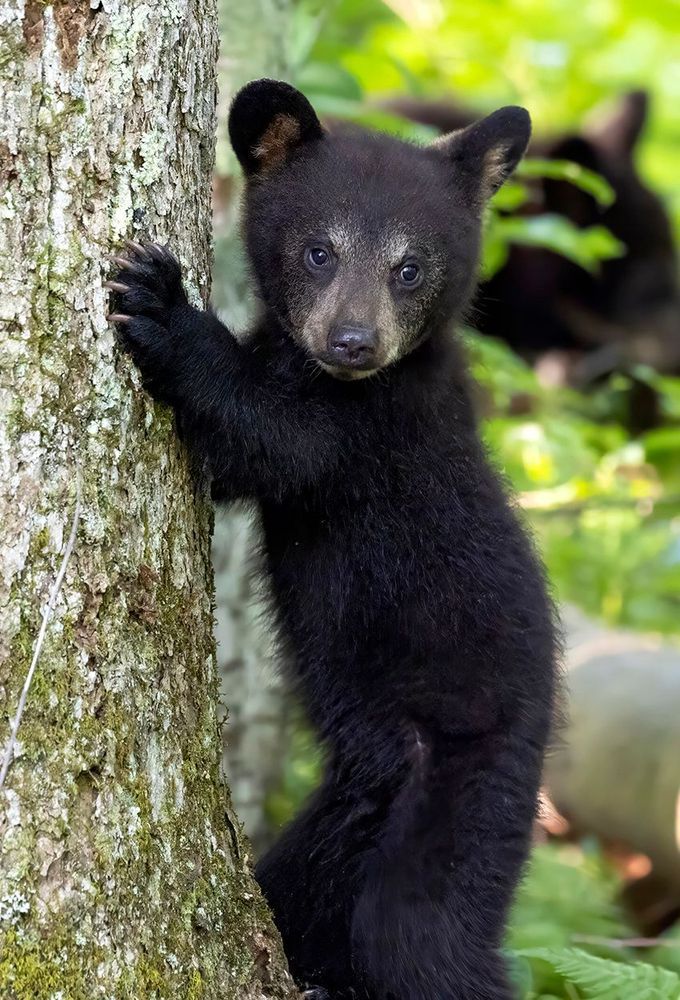
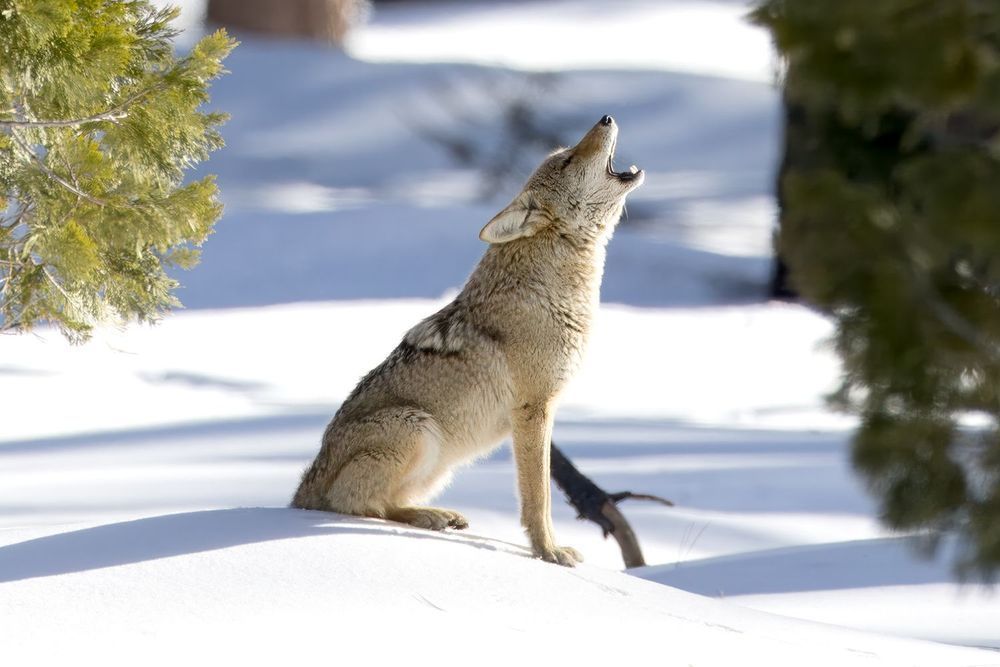
Two more images reveal the range of that approach. Stokes’s Little Climber brings attention to a black bear cub’s face and its grip on a tree. In Nachman’s Winter’s Call, the coyote’s upward posture carries the picture, while snow and evergreens establish the setting. Expression, timing, and the arrangement of the frame give each photograph its own character.
For collectors, the work also has a practical point of entry: Artistic Creationz offers wildlife imagery as fine art prints, including metal prints. That connection between an encounter with an animal and a finished piece of wall art is the focus of its place at the top of our 2026 list.
What to study: How a gesture or expression becomes the center of a composition, supported by the surrounding light and texture.
Explore Artistic Creationz’s wildlife photography and fine art collections.
2. Paul Nicklen: An Immersive View of Ocean Life
Canadian photographer, filmmaker, and marine biologist Paul Nicklen brings readers into environments most will never experience firsthand. His work is closely associated with marine wildlife and the polar world, where the setting is inseparable from the animal’s story.
Nicklen co-founded SeaLegacy in 2014, connecting visual storytelling with ocean conservation. That purpose gives his photography a second layer: an encounter can introduce a species while also opening a conversation about the conditions it needs to survive.
For photographers studying his work in 2026, the useful question is how to make a viewer feel present. Look at the relationship between the subject and the space around it, then consider what would disappear if the frame were cropped more tightly.
What to study: The use of habitat, proximity, and perspective to give wildlife photographs a sense of immersion.
3. Cristina Mittermeier: Connecting Wildlife and Human Lives
Cristina Mittermeier’s photography explores the relationships among people, wildlife, and the environments they share. Born in Mexico, she founded the International League of Conservation Photographers in 2005 and co-founded SeaLegacy in 2014.
Her work offers a useful way to expand a wildlife story beyond the animal itself. Communities, cultural knowledge, and everyday dependence on an ecosystem can all belong in the same visual conversation. The result invites viewers to consider who lives alongside wildlife and whose future is connected to its protection.
She earns a place on this list for that breadth of perspective. A compelling wildlife project can move between animal encounters and human experience while maintaining a clear purpose.
What to study: How a sequence of photographs connects wildlife to the people and places around it.
4. Ami Vitale: The People Behind Conservation
Ami Vitale builds stories around the ties between people, wildlife, and the planet. A photographer, writer, and documentary filmmaker, she is also the founder of Vital Impacts, an organization that uses art to support conservation and environmental engagement.
Her work is especially valuable for photographers interested in the sustained effort behind conservation. The people who care for animals, protect habitat, and keep projects moving can carry as much of the narrative as a dramatic wildlife encounter.
Vitale’s inclusion encourages a broader definition of the wildlife feature. A strong story can show tenderness, difficult work, and collaboration alongside the beauty of a species. Those quieter scenes help readers understand what conservation looks like in practice.
What to study: How human relationships give an environmental story emotional depth and continuity.
5. Marsel van Oosten: Making Every Part of the Frame Count
Dutch nature photographer Marsel van Oosten won the 2018 Wildlife Photographer of the Year grand title with The Golden Couple, a photograph of two Qinling golden snub-nosed monkeys in China.
The image remains a rewarding study in composition. The animals’ warm coloring stands out against the surrounding forest, and their placement gives the photograph both clarity and intimacy. The museum’s account also describes the work behind the moment: learning to anticipate the monkeys’ behavior as they moved through the trees.
For a 2026 reading list, that combination of visual structure and observation remains relevant. A photograph can feel carefully composed even when the subject is entirely beyond the photographer’s control.
What to study: The relationship among color, light, subject placement, and the edges of the frame.
6. Melissa Groo: Attention to the Animal Comes First
Conservation photographer and writer Melissa Groo makes the welfare of her subjects central to her work. Her published approach emphasizes minimizing disturbance and avoiding baiting, playback, and other lures, with a stated exception for her backyard bird feeder.
That position matters because the process of making a wildlife photograph is part of its story. An intimate-looking image does not tell a viewer how it was obtained; the photographer’s field practices and captions provide that context.
Groo is a useful photographer to know for anyone developing both a visual style and an approach to working around animals. Studying her work means considering the encounter as well as the finished frame.
What to study: Patient observation, individual character, and the decisions that let an animal continue its normal activity.
7. Will Burrard-Lucas: A Different Perspective Through Camera Traps
British wildlife photographer Will Burrard-Lucas is known for remote photography and camera-trap systems. His work includes photographs of a melanistic leopard in Africa, captured in 2019 using his Camtraptions equipment.
A camera trap changes the photographer’s relationship with time. The composition can be prepared before an animal arrives, but success still depends on understanding movement, behavior, and the landscape. Technical preparation and field knowledge have to meet in the same place.
His work belongs on a 2026 list because it invites photographers to reconsider where a camera can be positioned and how a picture can be made. The perspective itself can become part of the story.
What to study: How remote placement and lighting reveal animals within their surroundings.
8. Tin Man Lee: Looking for the Moment That Connects
Tin Man Lee’s wildlife photography and teaching focus on emotion and storytelling. His recognition includes the grand prize in the Nature’s Best Photography Windland Smith Rice International Awards, and his work has been exhibited at the Smithsonian National Museum of Natural History.
His portfolio provides a starting point for a question many wildlife photographers eventually face: what makes someone stop and look? Technical skill gives a picture clarity, but a particular expression, interaction, or moment of tension gives the viewer something to respond to.
Lee is worth studying when editing a series of similar frames. The most successful photograph may be the one in which a small difference in posture changes the feeling of the entire scene.
What to study: Gesture, interaction, and the choice of a single frame from a longer encounter.
9. Wim van den Heever: Persistence and a Powerful Sense of Place
Wim van den Heever brings a recent major award to this year’s selection. His photograph Ghost Town Visitor won the 2025 Wildlife Photographer of the Year grand title and the competition’s Urban Wildlife category.
The image shows a brown hyena in Kolmanskop, an abandoned diamond-mining town in Namibia. The building, darkness, and atmosphere help make the animal’s presence memorable. According to the Natural History Museum, the photograph followed ten years of persistence.
It offers a powerful lesson for 2026: a location can deserve repeated attention long after an initial visit. Familiarity may reveal a possibility that a quick stop would never uncover.
What to study: How architecture, weather, and negative space turn an animal sighting into a story about place.
10. Josef Stefan: Behavior That Makes a Photograph Unforgettable
Austrian photographer Josef Stefan won the Wildlife Photographer of the Year Nuveen People’s Choice Award 2026 with Flying Rodent. Announced on March 25, the award gives him a direct connection to this year’s wildlife photography highlights.
The photograph shows an Iberian lynx tossing a rodent into the air in Spain. The Natural History Museum reports that Stefan spent two weeks observing lynx from a hide at Torre de Juan Abad in Ciudad Real.
The picture’s appeal begins with behavior: it captures something happening, with enough visual clarity for viewers to understand the moment. For photographers, it is an invitation to keep watching after the first successful portrait.
What to study: Anticipation and timing when an animal’s behavior creates the structure of the image.
A Closer Look at Our Featured Selection
These two photographs from Artistic Creationz bring the article back to the expressive possibilities of a single animal portrait.
Bring These Ideas Into Your Own Wildlife Photography
Choose one photographer from this list and spend time with a small group of their images. Trace where your eye goes first. Look at how much habitat remains visible, how the light separates the subject, and which gesture gives the photograph its character.
Then take one of those observations into your next outing. Leave room around a bird. Wait for a change in posture. Return to a familiar location and watch before lifting the camera. Keep the animal’s welfare central to every decision, and describe the circumstances of an image accurately.
To continue exploring composition, read our guide to wildlife photography from a low angle. The next photograph worth keeping may begin with a change in the way you look.