A new publication has entered the art-show world with a practical promise: help artists prepare, help visitors discover, and give individual shows enough attention to become more than a date on a calendar.
Art Show Magazine has launched as an independent editorial home for show guides, artist profiles, visitor advice and reporting from behind the booth. For photographers who exhibit, collect, teach or simply want to see more work in person, the magazine fills an unusually useful space between a national events directory and a traditional arts publication.
Its central subject is not only the finished object. It is the full experience surrounding it: how artists prepare for a weekend, how visitors decide what to see, how organizers create a temporary community and how a conversation at a booth can become the beginning of a collection.
A home for the art-show experience
Photography publications often concentrate on cameras, technique and the making of an image. Art Show Magazine begins at the next stage. What happens when the photograph becomes a finished print, travels to a show and meets an audience?
The magazine’s editorial mission encompasses the work on display, the people who make it and the experience of exhibiting and visiting. Accurate dates, venues, captions, artwork details and credits are treated as part of the reporting. That attention matters in a field where useful information can be scattered among social posts, organizer pages and last-minute updates.
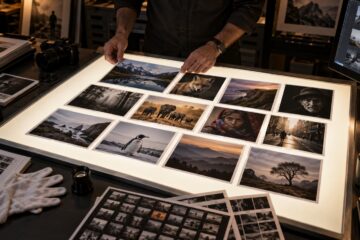
For photographers, the publication also provides a natural companion to Shutterbug News features about turning photographs into finished metal prints and building a portfolio people remember. Making the work is essential; presenting it coherently is what allows a visitor to understand the larger body of work.
Individual show guides built for real plans
The publication’s growing collection of individual show guides gives each event its own article instead of burying dozens of shows in a single roundup. Dates, hours, location details, admission information, organizer links and practical context are organized to help a reader make an actual plan.
The companion Upcoming Shows directory provides the broader view. A visitor can scan what is coming, filter the possibilities and then move into a detailed preview. For artists, the same directory offers a way to follow the wider calendar, observe how shows position themselves and identify events that may be worth researching for a future application.
This is more useful than a bare event listing because the guide can answer the questions that determine whether a weekend works: Is the show indoors or outside? How large is it? What kinds of work are represented? Is there family programming? Where should a first-time visitor begin?
Practical reporting from behind the booth
An art-show booth is a compact gallery, studio outpost, sales floor and conversation space. The magazine’s Behind the Booth section looks directly at that working environment.
Coverage addresses display planning, lighting, signage, packing, inventory, weather, booth staffing, live demonstrations, commissions and post-show follow-up. These are operational subjects, but they affect how the art is seen. A reflection across a framed photograph, an unclear edition label or a booth entrance blocked by packaging can interrupt a visitor’s relationship with otherwise strong work.
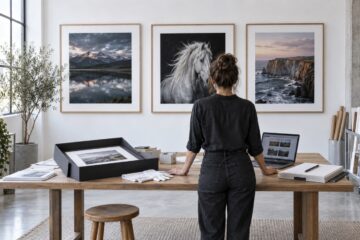
Photographers thinking about exhibition presentation can pair that guidance with Shutterbug News’s article on building a sequence of photographs into a story. A booth is also a sequence: the opening image, the visual rhythm from wall to wall and the smaller details that reward a closer look.
Artist profiles that connect work and process
The Artists section creates room for profiles, interviews and practical stories. A strong profile can introduce a body of work while also explaining the decisions behind it: subject, material, process, presentation and the route by which an artist found an audience.
That context is particularly valuable for photography. Two prints may share a subject yet differ completely in intent, capture method, editing, scale, surface and edition. Profiles give artists the space to describe those choices in their own terms and give readers a reason to look beyond a thumbnail.
The magazine has already profiled Neal Nachman and Liz Stokes of Artistic Creationz, connecting their wildlife, landscape and fine-art photography with their exhibition practice. It demonstrates how the platform can move between an artist’s portfolio and the practical reality of presenting that work to collectors.
A more welcoming starting point for visitors
Art shows are approachable, but first-time visitors often arrive with questions they may hesitate to ask. Is it acceptable to photograph a booth? How do you begin a conversation? What is included in the price? What should you know before buying a print?
The magazine’s For Visitors section answers those questions without turning the experience into a test of expertise. Its guides encourage readers to plan for comfort, look before rushing, ask respectful questions and record the names of artists whose work stays with them.
That visitor education benefits exhibitors too. A person who understands editions, materials, dimensions and care can have a more useful conversation at the booth. The goal is not to pressure a purchase. It is to replace uncertainty with enough knowledge for genuine curiosity to take over.
Benefits for photographers, artists and collectors
- For exhibiting photographers: practical booth guidance, show research, profile opportunities and a broader view of the national calendar.
- For emerging artists: clear explanations of applications, presentation, pricing, commissions and visitor conversations.
- For collectors: introductions to artists, explanations of materials and editions, and a way to plan art-centered travel.
- For organizers: event previews that make essential details easier to find and give a show a lasting editorial page.
- For curious visitors: straightforward advice that makes an unfamiliar show easier to enter and enjoy.
Artists, organizers and readers can suggest profiles, upcoming shows, reviews and field reports through the magazine’s editorial submission page. That open channel gives local and regional events a route into a wider conversation while preserving an editorial structure around the coverage.
Why the launch matters
A photograph reaches a different stage of its life when it becomes an object on a wall. Art Show Magazine is built around that transition—and around the people who make the encounter possible. Its guides help readers arrive. Its profiles help them understand what they see. Its practical reporting helps artists create a better setting for the work.
The best way to begin is simple: visit Art Show Magazine, choose an upcoming show and follow one artist or idea that was not on your list before. A useful publication should not replace the experience of seeing art in person. It should make that experience easier to find and more rewarding when it happens.
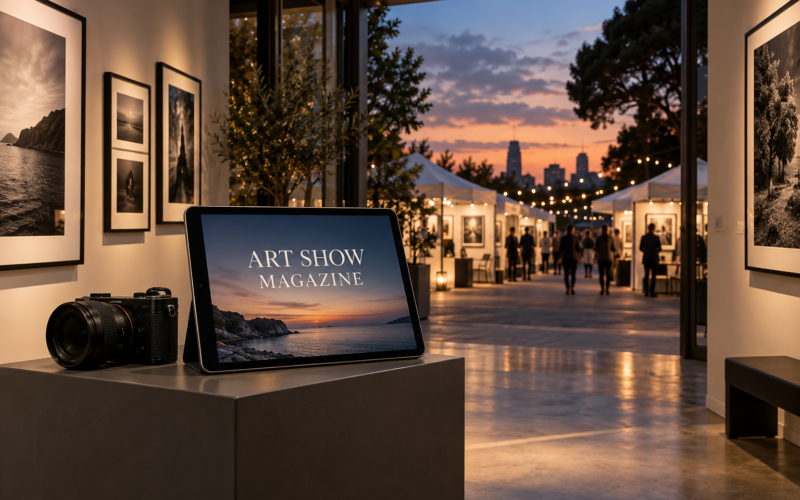
Image note: The feature photograph is an original conceptual editorial image created for this article. It does not document a specific art show or newsroom.