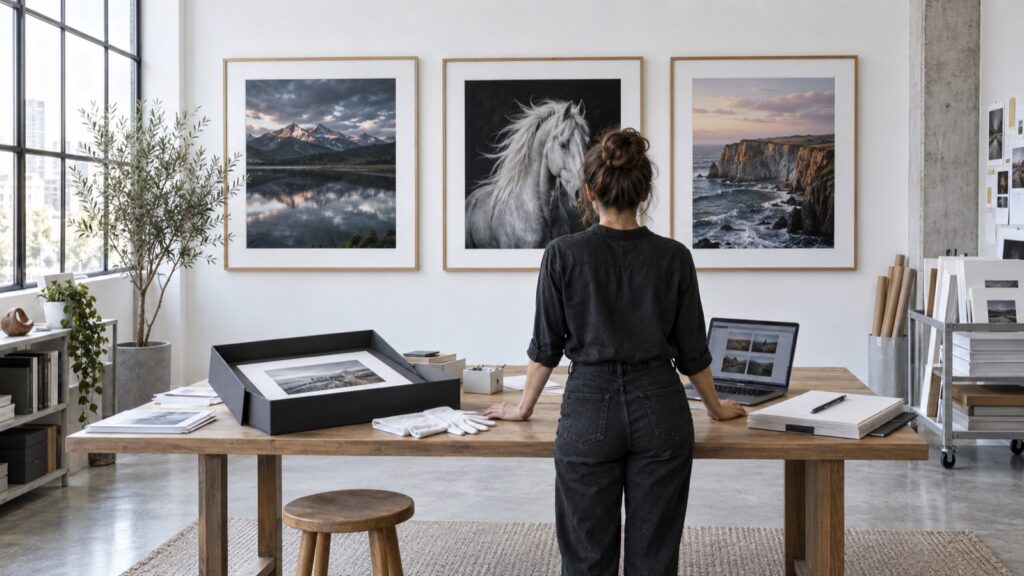
A photograph that works beautifully on a screen can lose a face, a caption or an important edge when it becomes a bound book. Photobook layout adds physical constraints: pages are cut, the binding draws attention toward a central gutter, and the reader holds an object rather than viewing an unlimited digital canvas.
Separate trim, bleed and safe content
Trim marks the approximate finished page edge. Bleed is image area extending beyond that cut so a full-page photograph does not acquire an unintended white sliver. The safe area is where important content belongs. Blurb emphasizes that normal production variation makes these boundaries practical allowances, not exact promises about where a blade will land.
Use the current template for your chosen printer, format, paper and binding. Do not copy an allowance from an unrelated book. Extend a full-bleed background to the template’s bleed edge, while keeping important faces, text and details inside its safe boundary.
Treat the gutter as part of the composition
Before spanning a photograph across two pages, ask what happens at the fold. A horizon may tolerate the interruption; an eye or a tiny subject may not. Try the image on one page, across the spread and with a margin. Choose the version that preserves the photograph’s main relationship rather than automatically choosing the largest reproduction.
Use a dummy made from folded blank sheets to check which pages face each other and where captions will sit. It will not simulate every binding behavior, but it can reveal awkward page relationships before you spend time refining color and typography.
Order a proof that tests the difficult pages
Inspect a physical proof for inner-margin readability, unintended edge clipping, caption position and spread alignment. Include a dark photograph and a subtle tonal image among the pages you check carefully. Record changes by page number so revisions remain easy to verify.
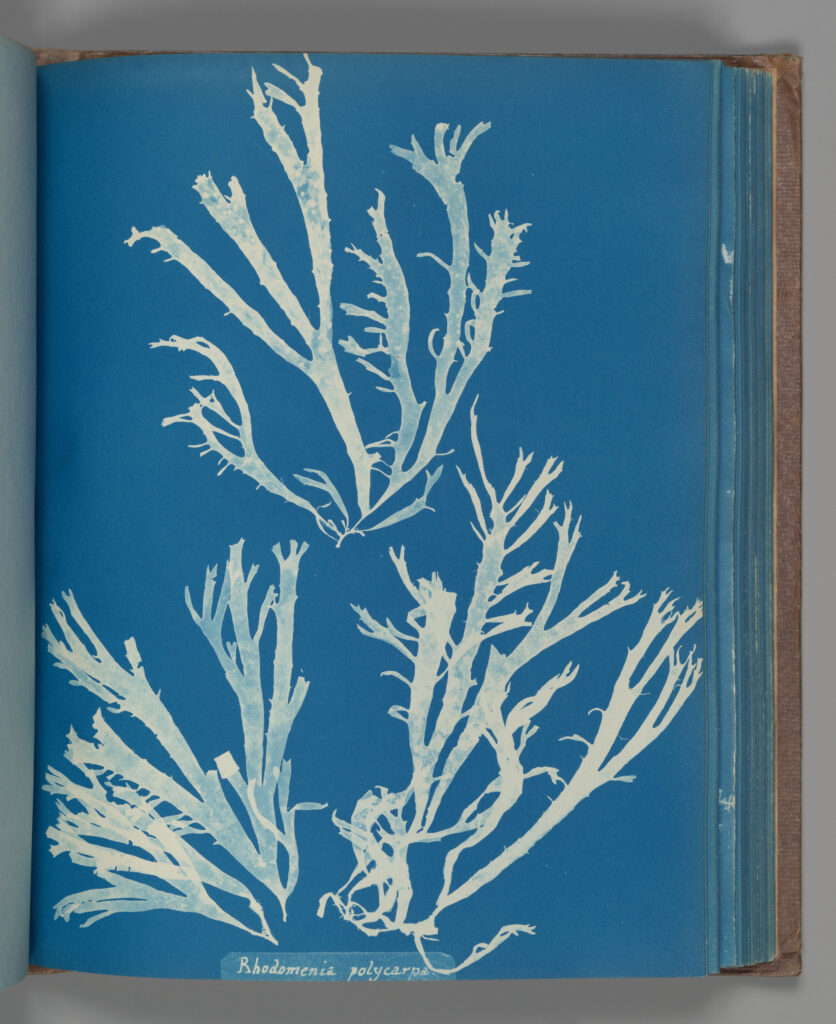
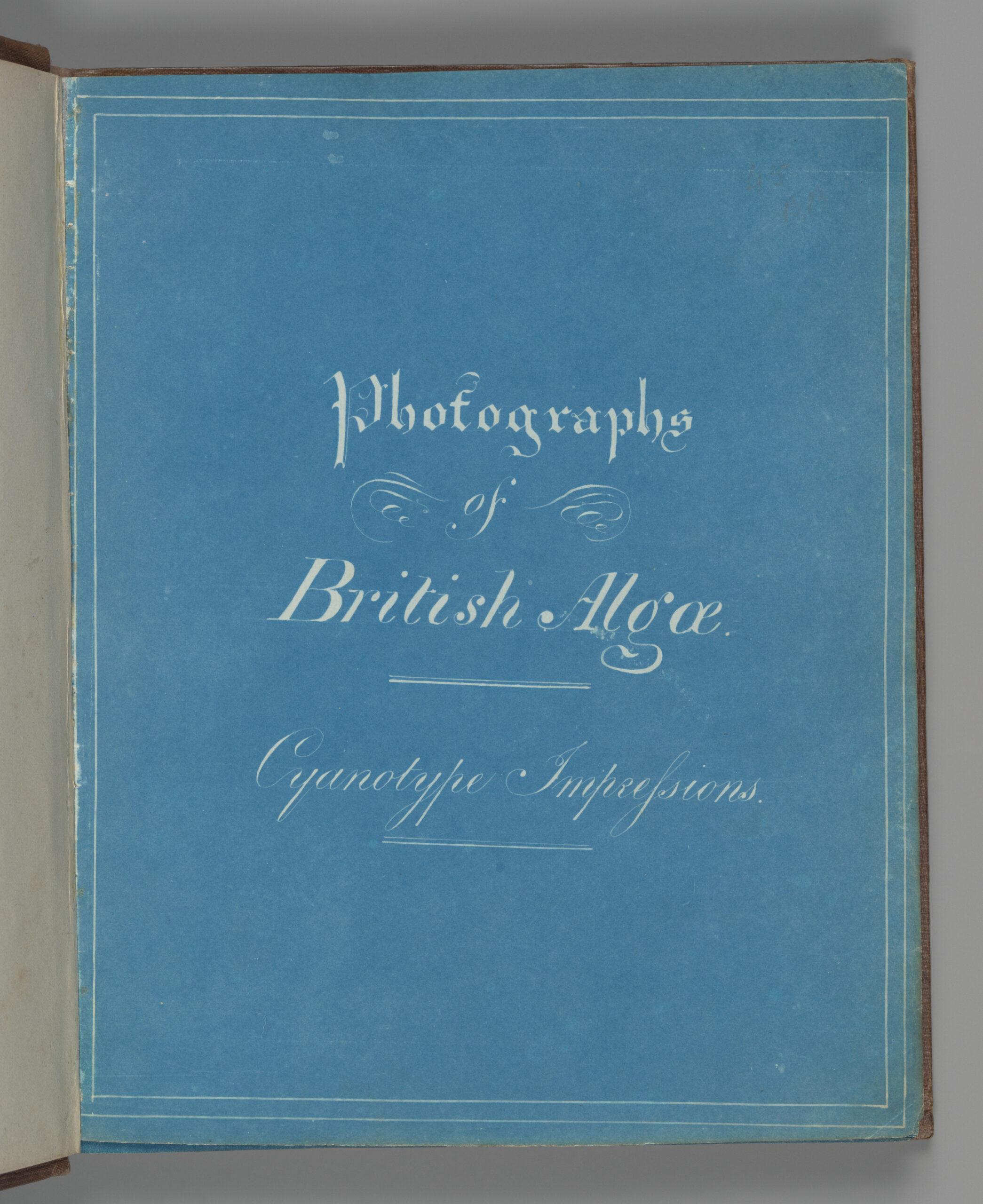
The historical Atkins title page shown here illustrates a photographic book as a physical object; it is not a template for a modern printing service. For current production, pair layout checks with soft proofing and a deliberate choice between home printing and a lab. The final proof should be judged in the format readers will actually handle.
Sources and further reading
Anna Atkins, Photographs of British Algae: Cyanotype Impressions, 1843–53. The Metropolitan Museum of Art, Gilman Collection, Purchase, The Horace W. Goldsmith Foundation Gift, through Joyce and Robert Menschel, 2005; 2005.100.557 (1–154). Public domain / Met Open Access.